

Intro
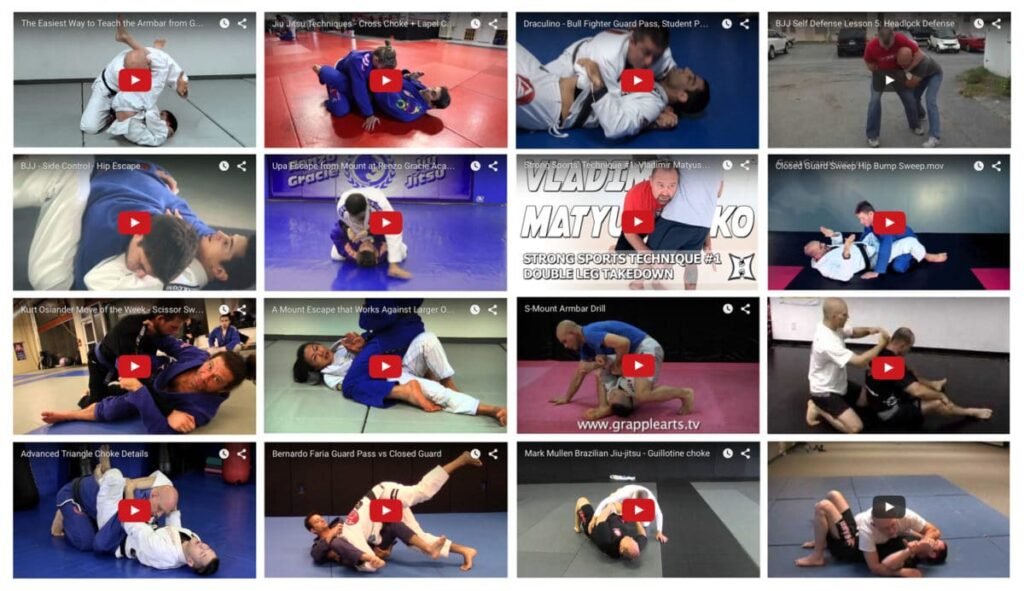
Hi there, Crish here with a brand new Episode 16 of Grounded Ramblings BlogCast. Today we’re looking at the BJJ app & instructionals era, from old-school tapes and mail-order learning to the moment jiu-jitsu ended up living in your pocket.
The timeline is wild: Carlos Gracie was already teaching through print in 1948, the Gracie in Action tapes appeared in the late 1980s, Gracie Jiu Jitsu Basics arrived in 1991 as the first true video instructional, Renzo Gracie and Craig Kukuk followed in 1994, and by 2016 we had clearly documented smartphone-era BJJ app learning.
By the end of this episode, you’ll see how BJJ apps and instructionals changed the game, for better and for worse. And yes, somewhere along the way, half of us became part student, part collector, and part late-night technique hoarder.
Chapter 1.
Before YouTube, BJJ Was Local and Limited
Before all this digital stuff, jiu-jitsu was a very local experience. Your coach was your search engine, your senior belts were your comment section, and your training partners were your fact-checkers. If your academy had strong fundamentals, you were lucky. If your academy had holes in its game, well… congratulations, those holes became your holes too.
There was something brutally simple about that era. You showed up, you drilled what the room drilled, and you rolled with what the room rolled. No one was sitting at home comparing twelve different half guard systems while eating toast in their underwear. You learned by repetition, by confusion, by getting smashed, and hopefully by slowly getting a bit less smashed over time.
And to be fair, that old model had strengths. It kept people grounded. It forced you to build timing with actual bodies instead of imaginary perfect reactions in your head. The downside, of course, was that if your coach was limited, your world was limited. Your whole game might be trapped inside one gym’s blind spots.
That’s hard for younger grapplers to imagine now. These days, if you get curious about a position, you can go hunting online in seconds. Back then, you might spend six months trying to solve one problem and still come away looking like a man unsuccessfully folding a fitted sheet.
Chapter 2.
The First BJJ VHS Tapes Changed Everything
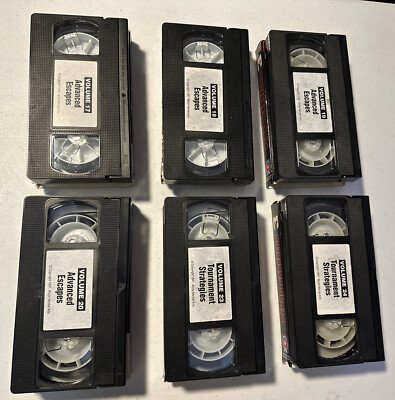
The first big change came with VHS. According to the sources we’ve got, the Gracie in Action tapes started appearing in the late 1980s, and they were built around challenge-match footage rather than the kind of step-by-step teaching we now expect from a modern instructional.
That detail matters because early BJJ media was not really saying, “Here’s lesson one.” It was saying, “Look, this works.” It was proof, theatre, marketing, and propaganda all rolled into one grainy cassette. And honestly, you’ve got to admire the boldness of it. Before click funnels and Instagram reels, the strategy was basically: film the fights, sell the myth, and let curiosity do the rest.
There’s something almost charming about how rough it all was. No polished studio. No slick drone shots. No cinematic background music to let you know an armbar was emotionally significant. Just challenge matches, old-school tape quality, and a giant sense that something different was happening.
That was the real power of those VHS tapes. They made BJJ feel mysterious, practical, and slightly dangerous. They gave people outside Brazil a glimpse of something that looked less like point-scoring karate demo stuff and more like controlled chaos with a plan. In other words, they didn’t just spread information. They spread intrigue.
Chapter 3.
The First Real BJJ Instructional Was in 1991
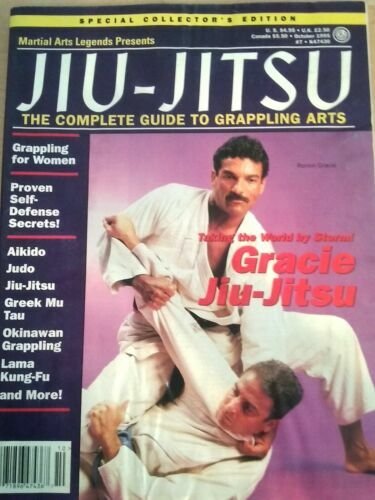
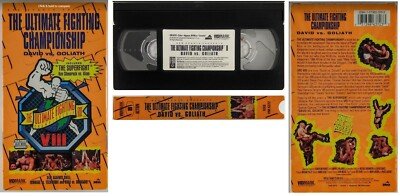
Then came a proper turning point. BJJ Heroes identifies Gracie Jiu Jitsu Basics, released in 1991 by Rorion and Royce Gracie, as the first true BJJ video instructional.
That is a big moment in martial arts history, because it marks the shift from “watch us prove it” to “watch us teach it.” Once that happened, jiu-jitsu was no longer just a style you had to stumble across through luck, geography, or gym lineage. It became something you could buy, take home, rewind, and study in your living room.
And let’s be honest, there’s something very funny now about the idea of rewinding a tape to rewatch a technique. Younger people hear “rewind” and think it’s something you do emotionally after a bad date. Back then, it was part of your training method. If the tape chewed up your lesson, that was just adversity training.
But there’s a deeper point here. The first instructional changed the student mindset. Suddenly, a practitioner could start seeing jiu-jitsu as a system of learnable components rather than just a mysterious skill possessed by a few tough blokes in one lineage. That is one of the roots of modern BJJ pedagogy. The moment technique became portable, the whole culture started changing.
Chapter 4.
UFC Made Everyone Want BJJ Tapes
If 1991 opened the door, UFC 1 kicked it off the hinges. After UFC 1 in November 1993, demand for BJJ teaching material grew, and one of the early landmarks highlighted in the sources is the Renzo Gracie and Craig Kukuk instructional from 1994.
This makes perfect sense when you think about it. People saw Royce Gracie beating bigger, stronger men and suddenly wanted the answer key. They did not just want to watch the spectacle. They wanted to buy the secret. That is when instructionals really started becoming part of the BJJ economy.
And this is where martial arts gets funny in a very human way. Every generation thinks it has discovered forbidden knowledge. In the 90s, that forbidden knowledge arrived on tape. Today it arrives as a downloadable series with a dramatic title, a coupon code, and a bloke looking intense on the cover while explaining side control in six volumes.
Still, the effect was massive. The UFC did for BJJ instructionals what a hit film does for book sales. It created hunger. It turned public curiosity into private study. And once people got the idea that they could learn even a piece of this from home, the market for organised teaching was never going back into the bottle.

Chapter 5.
How BJJ DVDs Turned Jiu-Jitsu Into a Business
As the years went on, the format got more polished. BJJ Heroes points to late-1990s instructional material from names like Mario Sperry, and it notes that Budo Videos, founded in 2003, helped professionalise BJJ DVD production.
Now this is where things really start to look familiar to us. Because once teaching becomes more polished, it also becomes more commercial. Better menus, better cameras, better structure, better branding. The instructional was no longer just an educational tool. It was a product line.
That brought some genuine benefits. More structure meant more accessibility. Better production meant students could actually follow along without feeling like they were decoding surveillance footage. Coaches could organise information better, and learners had a clearer roadmap than the old “just show up and survive” model.
But it also created a new temptation: selling complexity. And martial arts has always had a weakness for that. If one DVD is good, then eight DVDs must be genius. If one concept helps, then thirty-seven layers of conceptual language must make you enlightened. Somewhere in that process, BJJ started realising there was real money in making knowledge look premium.
That is not automatically bad. But it changed the incentives. Once instruction becomes an industry, the question is no longer just “What helps students?” It also becomes “What sells?”

Chapter 6.
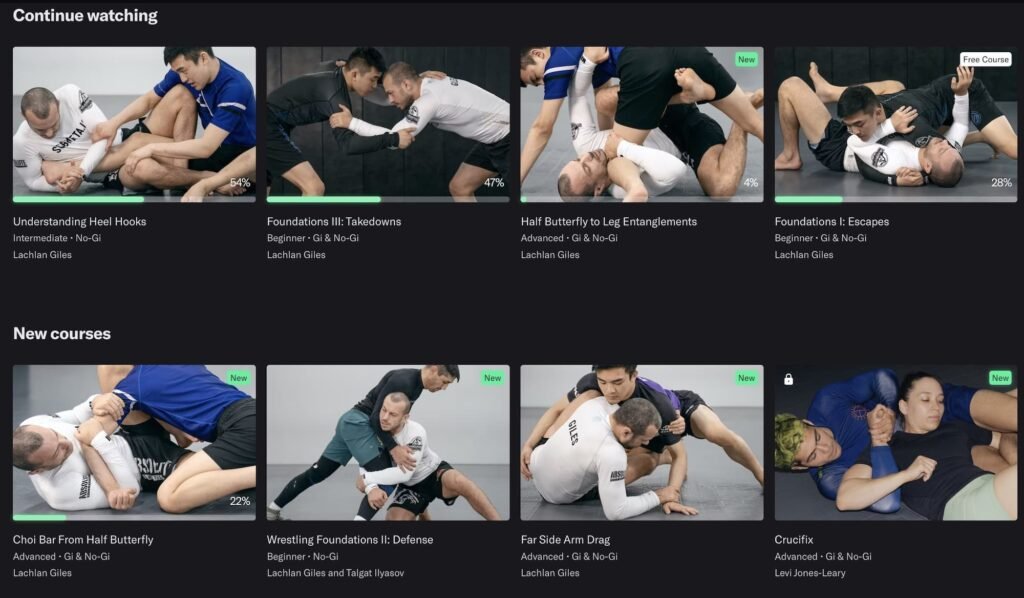
The First BJJ Apps Put Jiu-Jitsu in Your Pocket
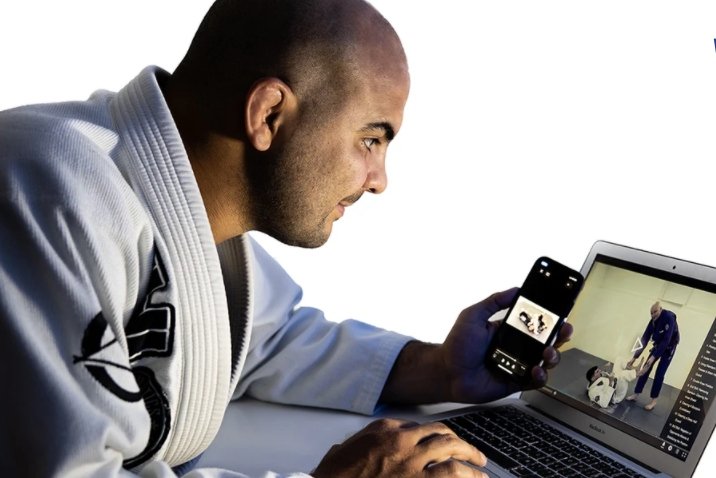
Then came the smartphone era, and that changed the rhythm of learning again. By 9 March 2016, Stephan Kesting was publicly promoting the BJJ Roadmap app for smartphones and tablets, which gives us a clear marker for BJJ’s mobile-learning phase.
That is a staggering shift when you zoom out. In one generation, BJJ went from print in 1948, to VHS in the late 1980s, to the first full video instructional in 1991, and then to dedicated mobile learning by 2016.
That’s not just a tech story. That’s a culture story.
Because once jiu-jitsu moved onto your phone, it stopped waiting for class time. It followed you everywhere. On the sofa, on the train, in the lunch break, in bed when you should absolutely be asleep. It became the sort of obsession that fits in your pocket, which is brilliant for learning and terrible for boundaries.
And let’s be honest — this is where many grapplers became digital goblins. One quick look at a passing clip turns into forty-five minutes of guard retention, two instructionals on outside passing, and a sudden belief that you’re about to reinvent your entire A-game tomorrow night. Then you get to class and forget everything the second somebody grabs your collar.
That’s the app era in a nutshell: incredible access, zero mercy.
Chapter 7.
Why BJJ Instructionals Helped Ordinary Students
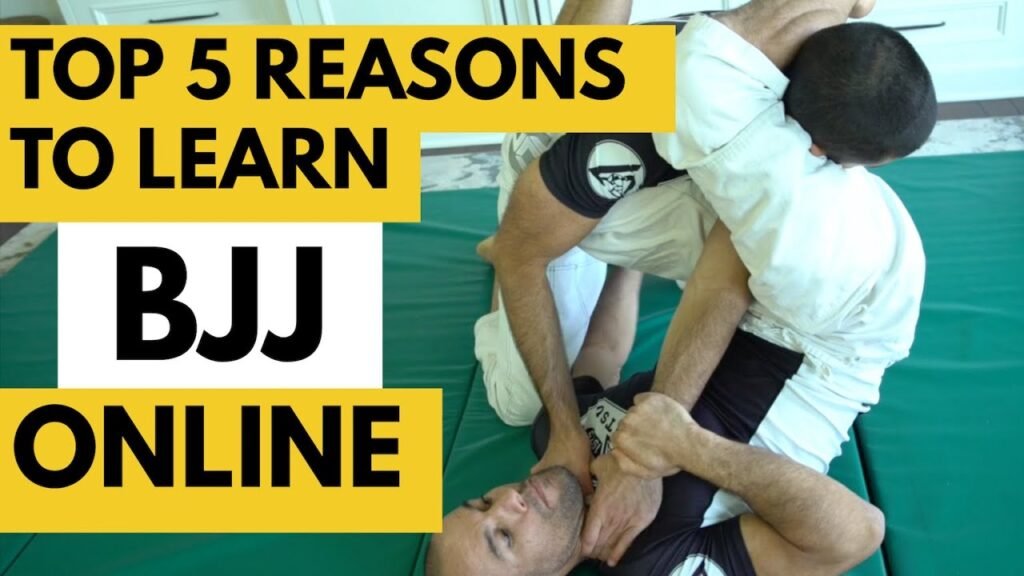
Now to be fair, instructionals and apps solved real problems. For ordinary students, especially those outside major BJJ hubs, digital learning opened the door to world-class teaching that used to be limited by geography, cost, or gym lineage. That broader access became much more possible once BJJ media evolved from VHS and DVD into app-based and online formats.
That matters more than people admit. Not everyone trains in a famous room. Not everyone has a world champion correcting their underhook on a Tuesday night. A lot of people train in smaller academies, regional towns, or rooms where the coach is doing their best but simply cannot cover every modern position in depth.
For those students, instructionals were a gift. They allowed people to fill gaps, check details, revisit positions slowly, and learn from specialists they would never meet in person. That is a genuinely democratic shift. It widened the map of jiu-jitsu.
And it also helped a certain kind of learner — the overthinker, the note-taker, the older student trying to conserve training time. When your body does not let you brute-force every session, being able to study with intent becomes valuable. So yes, digital BJJ absolutely made the art more accessible. The mistake is not in using instructionals. The mistake is in thinking access alone equals understanding.
Chapter 8.
The Biggest Lie in BJJ Learning: Watching Is Not Doing
Here is the trap of the whole era: watching feels productive. Sometimes it even feels more productive than training, because watching is clean and training is messy. On screen, everything makes sense. Your posture is imaginary, your timing is perfect in theory, and the other person politely behaves like a cooperative mannequin sent by the gods of content.
Then you get to class and reality punches you in the face. Or more accurately, somebody cross-faces you, smashes your frames, and your entire beautifully organised understanding of the position collapses like garden furniture in a storm.
That is the biggest lie of digital learning. Information is not the same as application. Recognition is not the same as timing. And timing is definitely not the same as composure when a sweaty blue belt is trying to fold you into modern art.
This is why some people become collectors instead of practitioners. They stockpile techniques the way other people stockpile self-help books. It feels like growth because there is movement, novelty, and stimulation. But growth in jiu-jitsu is usually much more boring than that. It is repetition, pressure, failure, adjustment, and doing simple things better under stress.
So yes, watch the clip. Study the series. Take notes. But if you are not testing, forgetting, correcting, and retesting, then what you have is not skill. It is just very athletic daydreaming.
Chapter 9.
How Apps and Social Media Changed BJJ Authority
Another thing the instructional era changed was authority. In older models, authority came mostly from the room — your coach, their lineage, your training partners, and what people could actually feel when they rolled with you. Now authority can also come from visibility, production quality, clip editing, confidence, and how well someone packages an idea online.
That does not mean online teachers are frauds. Far from it. Some are brilliant. But the medium changes perception. A well-lit mat space, a clever camera angle, and a polished explanation can make almost anything sound profound for ninety seconds. Add dramatic music and suddenly a basic grip break feels like a philosophical revolution.
This is where students need filters. Not cynicism filters. Because some people have incredible jiu-jitsu but cannot explain it. Others can explain things beautifully but may not give enough context about body type, ruleset, age, flexibility, or risk. And some are simply excellent marketers in a rash guard.
There’s a funny truth here: the internet has made BJJ smarter, but it has also made BJJ more performative. Sometimes you are learning. Sometimes you are being sold a feeling of learning. And if you are a time-poor student, especially an older one, knowing the difference becomes one of the most important skills in the game.
Chapter 10.
My Honest Take on BJJ Apps and Instructionals
So where do I land on all of this? Pretty simply: apps and instructionals are excellent servants and terrible masters.
Use them to preview a position before class. Use them to revisit a detail after class. Use them when your gym does not cover something well, or when you need a second explanation that lands better for your brain. Use them as a map, a reminder, a reference point. That is where they shine.
But do not build your whole identity around consuming jiu-jitsu. Do not confuse owning instructionals with owning skill. And do not let your phone turn you into a permanent student of theory who never settles down long enough to build a dependable game.
For me, the best use of this era is selective, not obsessive. Pick a few trusted voices. Focus on what fits your body, your age, your goals, and your weekly training reality. Pressure-test what you study. Keep what works. Dump what does not. That is the grown-up version of learning.
Because in the end, the biggest question is not whether digital BJJ is good or bad. Clearly, it changed the game, and often for the better. The real question is whether you can use all that access without drowning in it. For older grapplers especially, the goal is not to know everything. It is to know enough, apply enough, and stay healthy enough to keep showing up.