
Chapter 1
Cop, Black Belt, and Survival Stories: What Law Enforcement Taught Me.
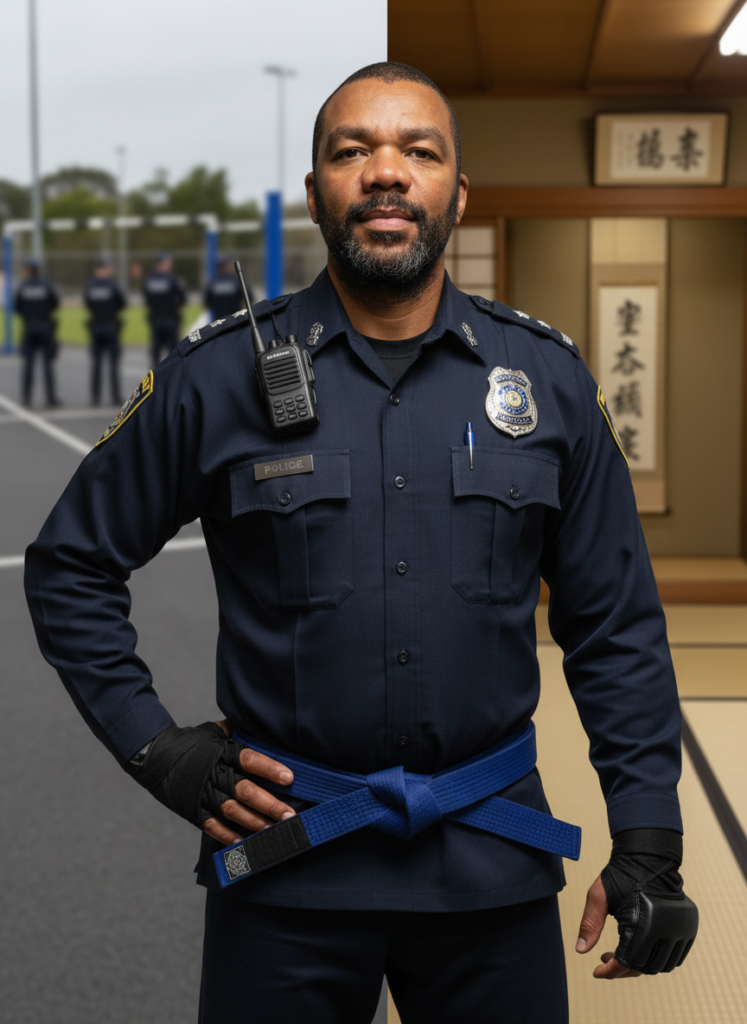
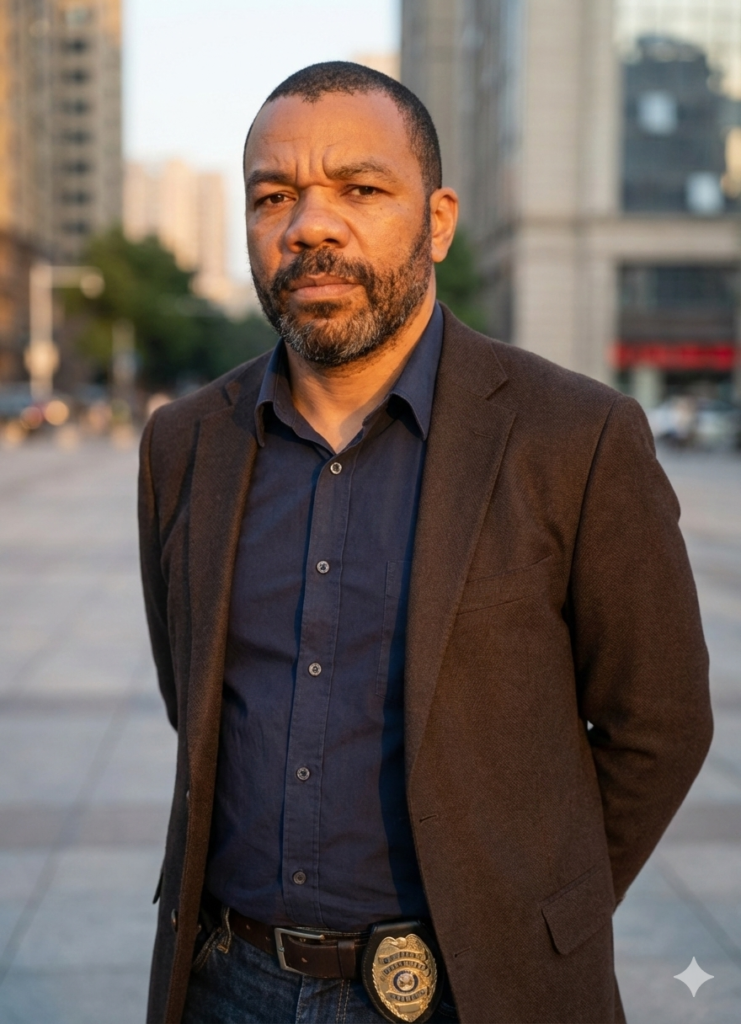
It is a strange thing to reinvent yourself at 40. Most men are buying sports cars or settling into the long, comfortable slide toward retirement. I was doing burpees in a uniform that didn’t quite fit, surrounded by kids who could have been my children.
I have always had a restless spirit. I played in bands until I was too old for the van life. I cooked in professional kitchens until the heat lost its charm. But policing was different. It was a dormant seed, planted deep in my childhood by American detective shows where justice was swift and the good guys always won. It was also, perhaps, a way to reclaim the sense of duty I felt in the Portuguese Army, a desire to stand between the vulnerable and the wolves.
But the reality of the Academy was a cold shower. In the Portuguese Army, respect was physical. You ran faster, marched longer, and shot straighter. If you were elite, you led.
In the Australian Police Academy, the physical standards had been lowered to widen the recruitment net. My “edge”: my fitness, my military discipline, didn’t matter as much here. The obstacle wasn’t the obstacle course; it was the lunch room. My squad was 80% twenty-somethings. They spoke a rapid-fire slang I was still decoding, bonded over memes I didn’t understand, and looked at me like I was a substitute teacher.
And then there was the voice in my head. Literally.
I spoke fluent English, but my accent was heavy, thick with the vowels of Portugal. In a job that is 90% verbal communication, de-escalating drunks, commanding scenes, giving evidence, I was terrified. Every time I opened my mouth, I felt the “foreigner” label slap onto my chest. I feared that when the moment came to command a room, they wouldn’t hear an authority; they’d hear a tourist.
Chapter 2
The Karate Trap
I entered the force with a secret weapon. Or so I thought.
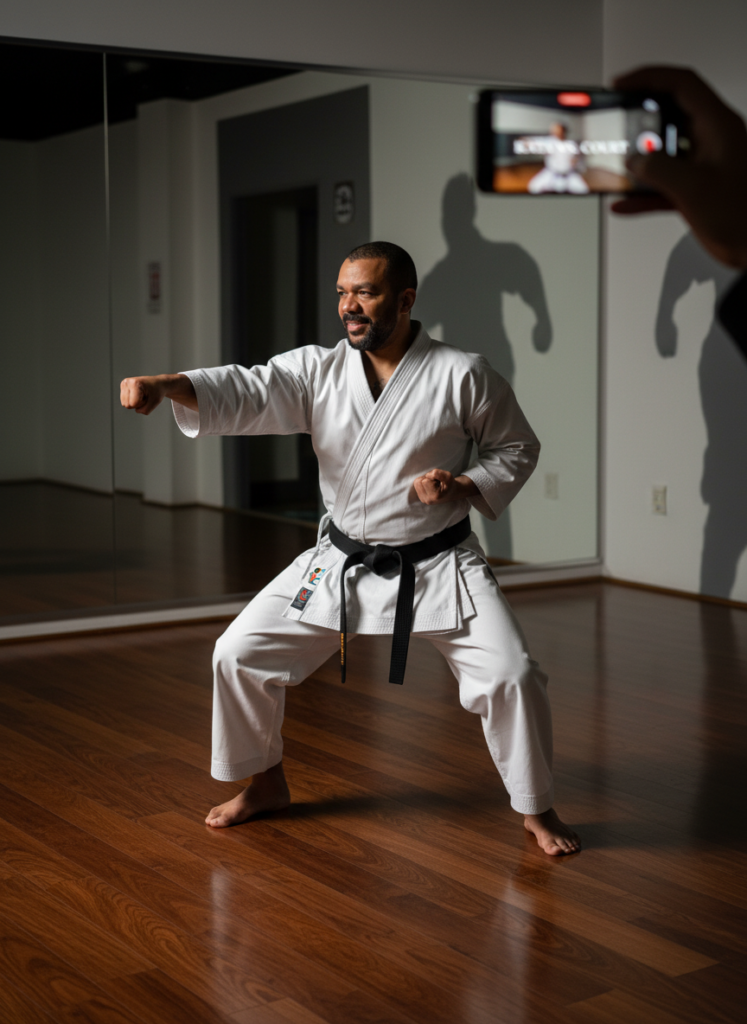
I was a Karate Black Belt. In my mind, this was my insurance policy. If things went sideways, I had the strikes, the speed, the power.
I was wrong.
Modern policing isn’t a Bruce Lee movie. It’s a liability minefield. We live in the age of the smartphone. Every arrest is a film premiere. And let me tell you, a police officer striking a citizen, even a justified, necessary strike against a violent offender, looks horrific on social media.
I watched colleagues rely on their fists. I saw the aftermath: broken hands (skulls are harder than knuckles), torn rotator cuffs, and the endless paperwork justifying every blow. Striking is chaotic. It creates distance when you need control. It causes pain when you need compliance.
My Black Belt, which I had worn with such pride, felt like a tool from a bygone era. I needed something that didn’t look like violence. I needed something that looked like control.
Chapter 3
The Gentle Art on the Grass
The lesson came on a humid afternoon, responding to a domestic violence call. The male was agitated, pacing, his aggression spiking like a fever. He wasn’t listening to verbal commands. He was big, and he was getting ready to explode.
My partner was tense, hand hovering near the belt. In the old days, or maybe with a different officer, this ends with pepper spray, batons, or a brawl.
I closed the distance. Not with a fighting stance, but with a calmness I hadn’t felt in the Academy. As he lunged, I didn’t punch. I changed levels.
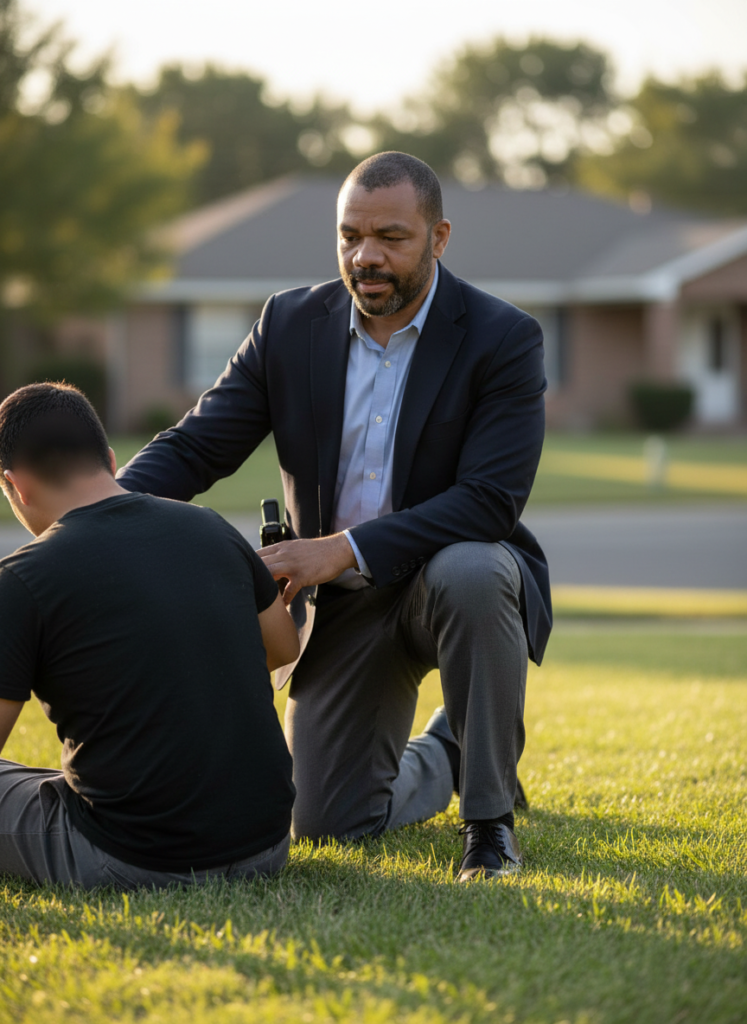
I secured a single leg, driving my shoulder into his hip. It wasn’t a slam; it was a guide. I took him down to a patch of soft grass in the front yard.
Before he could scramble, I had his arm isolated. A Kimura grip.
For the uninitiated, the Kimura is a figure four arm lock. It can break an arm if you rip it. But if you hold it? It’s a remote control for the human body. I didn’t crank it. I just held it. I whispered in his ear, “Mate, it’s over. Don’t move, and you won’t get hurt.”
The fight drained out of him. He was handcuffed without a bruise. I stood up, dusted off my knees, and looked at my partner. No blood. No broken bones. No viral video.
This, I thought. This is the way.
Chapter 4
The Meat Grinder
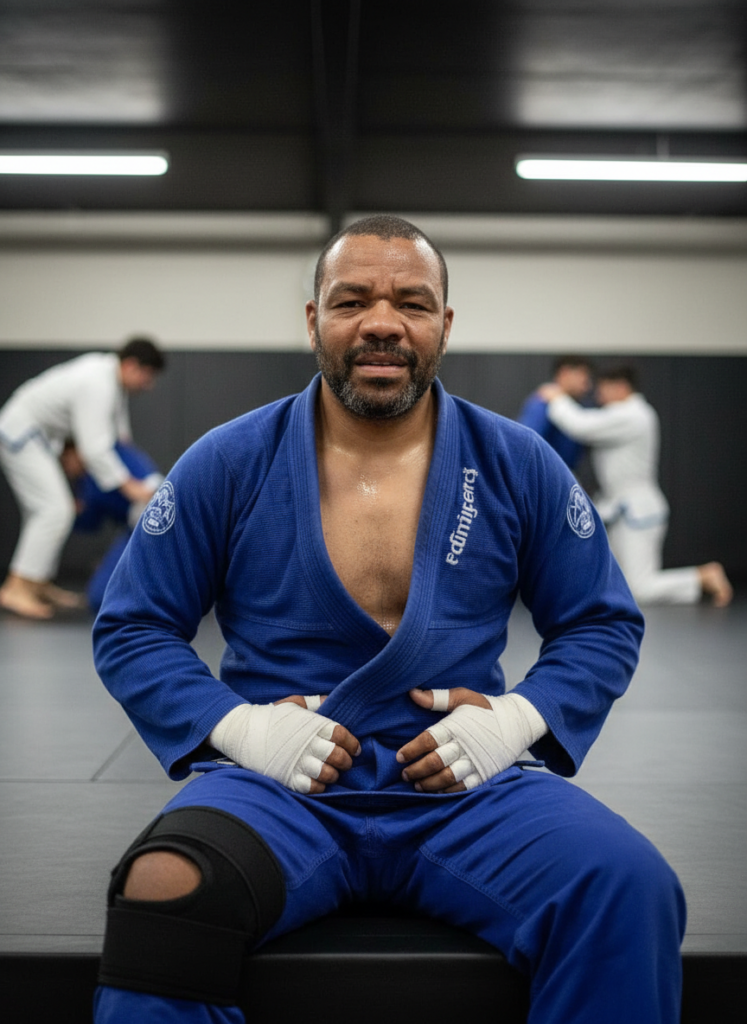
If the street was where I found the value of Jiu-Jitsu, the dojo was where I paid the tax.
I had fallen in love with the effectiveness of grappling, so I committed to the training. But I had walked into a “School of Hard Knocks.”
The pedagogy was prehistoric. It was the “sink or swim” method.
Warm up until you vomit. Learn a technique for five minutes. Then spar until you die.
As a white belt, I was fresh meat. Upper belts didn’t see a training partner; they saw a grappling dummy. They ragdolled me. They smashed me. There was no flow, only force.
And my body, now in its 40s, began to keep the score.
I remember my rib snapping, a sharp, searing pain that left me struggling for every breath.
I remember the torn meniscus, the knee swelling like a grapefruit, locking up as I tried to chase a suspect over a fence weeks later.
I remember the fingers, permanently swollen, looking like crooked twigs.
I would limp into the station for a night shift, hiding my limp so the Sergeant wouldn’t put me on light duties. I’d tape my fingers together to hold a pen. I was learning to control others, but I was losing control of my own physical integrity. I was breaking myself to learn how to not break others.
Chapter 5
The Intellectual Pivot
A rational man would have quit.
Why pay money to get beaten up, only to go to a job where you might get beaten up?
But I was stubborn. I had seen the magic on that grassy lawn. I knew that if I could learn this art without destroying the vessel, I would be a better cop and a better man.
I realized the problem wasn’t Jiu-Jitsu; it was the teaching.
I started looking for a better way. I stopped trying to win gym rounds against 25-year-old wrestlers. I started treating BJJ like a PhD, not a fight club.
I discovered resources like BJJ Mental Models and BJJ Concepts. I began to understand leverage, frames, and pedagogy. I learned that you can train slow. I learned that tapping isn’t losing.
I went back to the mats, but this time, I brought my brain, not just my bravery. I accepted that I would be the “Old Guy” who pulls guard, who plays safe, who taps early.
Because I had a badge to wear in the morning. And I realized that the most important belt wasn’t the one around my waist, it was the one that kept my pants up while I did the job I loved.