

Chapter 1: Reporting for Duty
This is about my Army Training, Portuguese Discipline and the Lifetime Impact in my life.
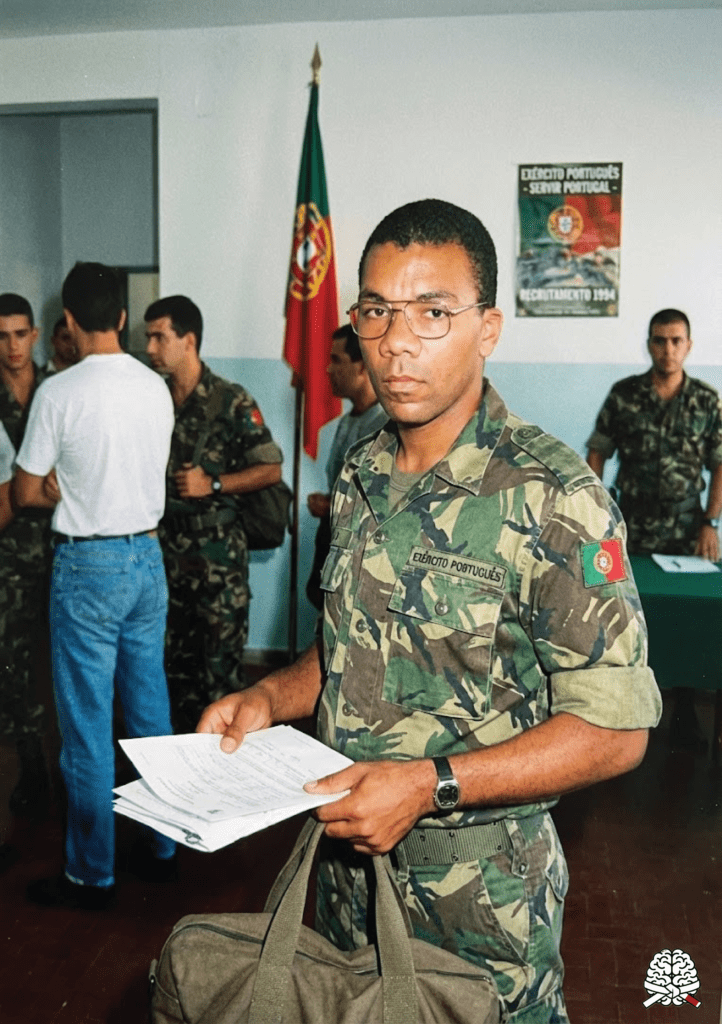
It was 1991. The world was changing, but in Portugal, some things were still the same. One of them was the Serviço Militar Obrigatório: mandatory conscription.
So I signed up and was sent to the Regimento de Artilharia de Costa (RAC), the Coastal Artillery Regiment. Our job was theoretical but terrifyingly heavy: we manned the fixed fortified batteries along the Setúbal Peninsula and the Estoril Line. Picture massive naval artillery pieces mounted in armoured turrets, pointing at the Atlantic, waiting for an invasion that would never come. Yes, I wanted some action but no one came!
Most young men dreaded the draft. They saw it as a prison sentence that stole a couple of years of their youth. I felt differently. I wasn’t resentful; I was nervous. I had a wife, the love of my life, my soul mate. We were in that blinding, forever stage of love where being apart feels like a physical amputation. I didn’t want to escape my duty, but I was terrified of leaving her behind.
I didn’t know it then, but I was trading one form of devotion for another. I was about to enter a world that would strip me down to my wiring and rebuild me, piece by piece.
Chapter 2: Meet Sergeant Ferreira
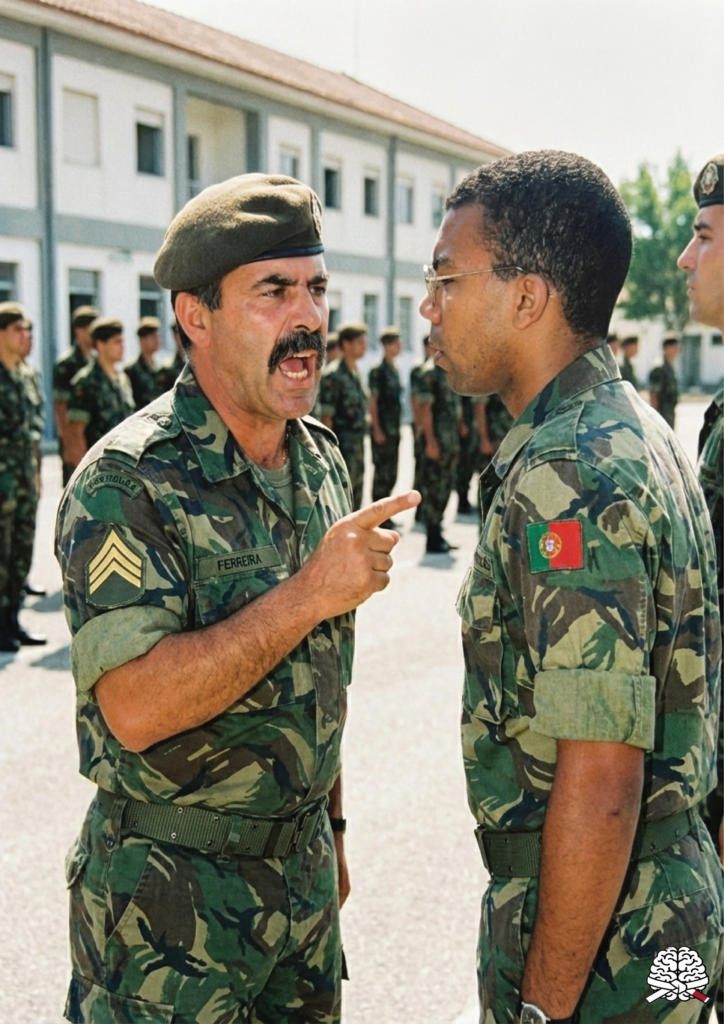
Every soldier has a “Sergeant Ferreira.” If you’ve seen a Hollywood war movie, you know him. He is the archetype. The cliché. The nightmare.
Ferreira didn’t speak; he projected. He was a screaming wall of noise and authority, a man who seemed to vibrate with a constant, simmering rage. He didn’t care about your feelings, your background, or your name. To him, we were raw material that needed to be hammered into shape, and he was the sledgehammer.
His signature catchphrase still rings in my ears, triggering a phantom spike of cortisol:
“Barrack inspection!”
It wasn’t just an inspection; it was a theatre of humiliation. He would find dust where no dust existed. He would find a crease where there was only flat fabric. He was the villain of our daily lives, the dragon we had to slay every morning just to survive until lunch.
Chapter 3: The Five-Minute War
Here is the irony: the physical suffering didn’t bother me.
I came from a background of Martial Arts. My body was already hardened. When Ferreira ordered us to run until our lungs burned or drop for endless sets of push-ups, I secretly enjoyed it. The pain was familiar. It was honest. It was just sweat and gravity, and I knew how to win that game.
But, what nearly broke me was the Reveille.
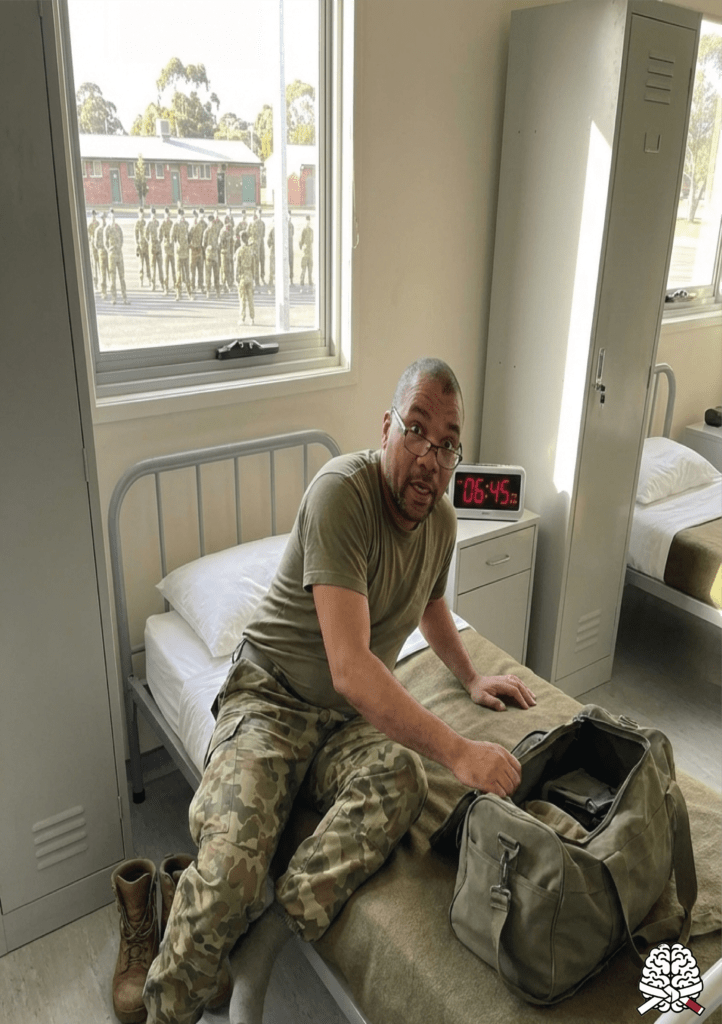
The horn would sound at sunrise, signalling the start of the duty day. From that second, we had exactly five minutes. Five minutes to wake up. Five minutes to make a bed with corners sharp enough to cut steak. Five minutes to shave, shower, dress in a full uniform, polish boots to a mirror shine, and stand at attention on the parade ground.
For a long time, I failed at this game, I mean it was all a game really. I was chaos in a uniform. I just could not wake up in tome for all what was expected of me. Maybe it was the rebek in me in where I prefered to stay up late drinking that nasty army wine and playing Portuguese poker. Funny thing abouth Portugal is that everywhere you go there is cheap wine. Anyways, I would arrive with a smudge on my boots or a shadow of stubble, and Ferreira would descend on me.
The punishment was always physical: running, sit-ups, push-ups. I took the punishment with a stone face, but inside, I was smiling. This was all familiar territory, skills I had previously developed with traditional karate training.
Chapter 4: Entering the Zone
Then, the shift happened.
I realized that the five-minute war couldn’t be won in five minutes. It had to be won before the war started.
I began waking up before the Reveille. While the barracks slept, I was already moving. Shaving in the dark quiet. Polishing boots until I could see my own tired reflection. By the time the horn blasted, I wasn’t scrambling; I was ready.
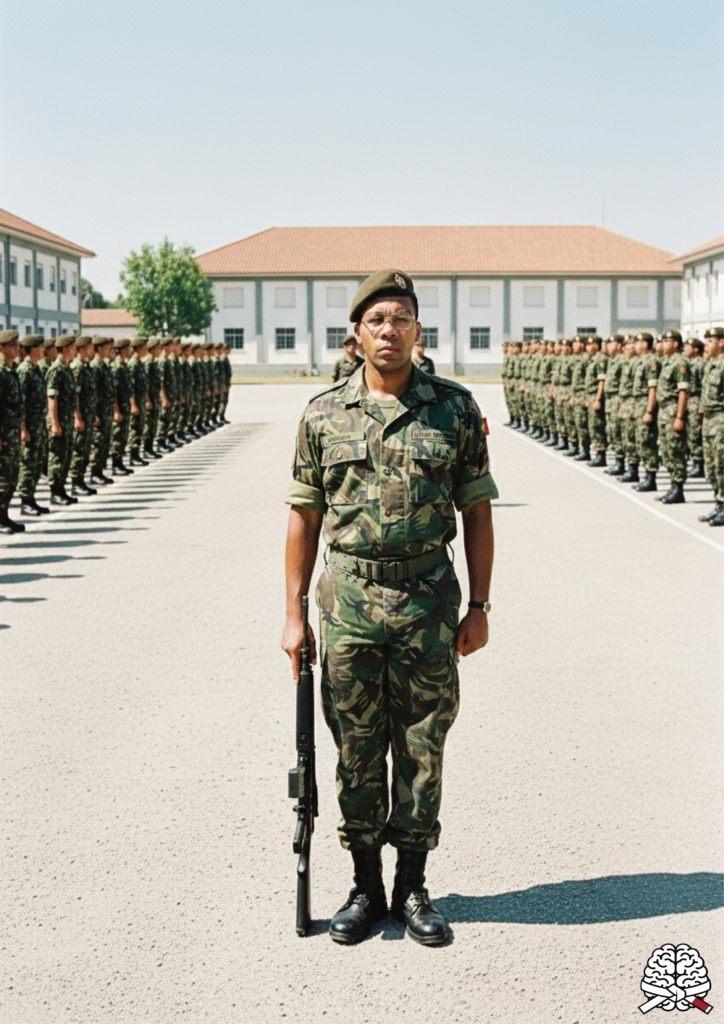
When I stood on that parade ground, perfectly dressed, standing statue-still for hours under the Portuguese sun, something clicked. The boredom dissolved. The pain in my feet faded. I entered “The Zone.”
I wasn’t suffering anymore; I was meditating. I would stand there, chest out, chin up, completely detached, thinking about what we were having for lunch. I found a strange, masochistic pride in the stillness. I had learned the secret: discipline isn’t about punishment. Discipline is about removing the chaos so you can find peace in the middle of the storm. This was the purpose of our training. In my view, it was the connection between military discipline and stoicism.
Chapter 5: Discipline, Karate, and Fathers
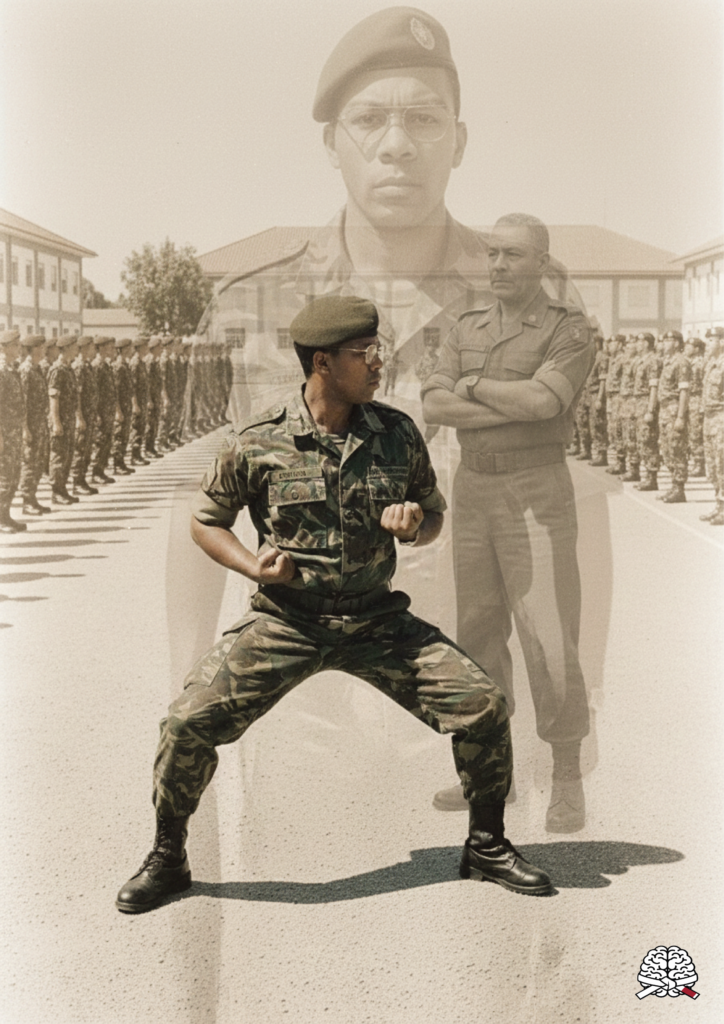
Looking back, I realize why I adapted. The Army was just a larger, louder version of my father.
My father instilled in me a sense of unbreakable discipline. It was the same energy I found in traditional Japanese Karate. It is a harsh, almost barbaric love. It demands total submission to the process. It tells you that you are not special, that you are just a white belt, a recruit, a son. You’re nothing special (contrary to modern parental views).
But there is safety in that structure. I secretly enjoyed being pushed to my limits because it silenced the noise of the world. In the Army, the rules were clear. If you followed them, you survived. If you excelled at them, you thrived. It was the first time I understood that hierarchy, when stripped of ego, is actually a survival mechanism. Same as in traditional Martial Arts which by the way are based on an army like structure. At least the training I experienced and grew to love.
Chapter 6: From Barracks to Immigration
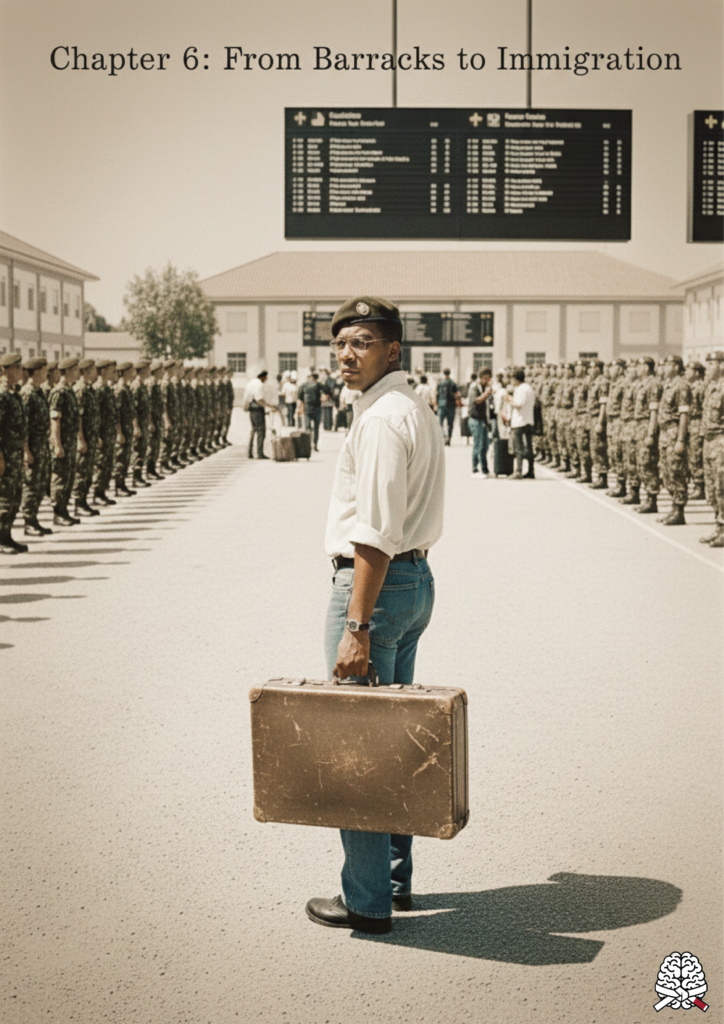
I didn’t know it in 1994, but Sergeant Ferreira was preparing me for my immigration journeys.
The resilience I built in the RAC became the armour I wore as an immigrant. When I landed in a new country, alone and invisible, I didn’t break.
When I had to take a second job washing dishes just to afford a home for my daughters, I didn’t complain (no one to hear it anyways). I treated the dirty plates like the parade ground, just another task to master.
When my relationships fractured and I suffered the deep, silent pain of heartbreak, I stood at attention and kept moving. I was a lonely imigrant with no one to confide to.
And when, at 40 years old, I decided to go back to school and become a cop, surrounded by kids half my age, I tapped into that old army grit.
I knew how to suffer. I knew how to wake up before the alarm. I knew that if I just polished the boots and stood my ground, I would eventually get to lunch.
Chapter 7: The Road Not Taken
People often ask about the cost of that level of discipline. Did it make me rigid? Did it kill my inner child?
Honestly? No. There was no cost. I loved every moment of my military career. The camaraderie, the simplicity, the brutal clarity of it.
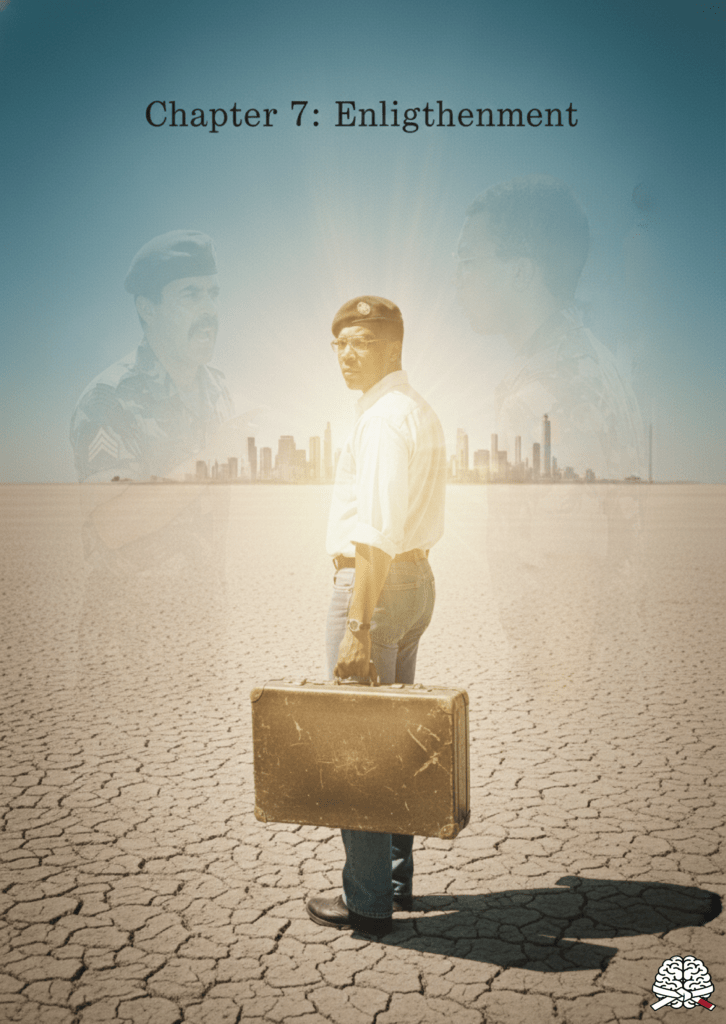
In fact, if fate hadn’t intervened, I might never have left. I was ready to sign on for a long career. But my wife fell pregnant with my first daughter. The hierarchy of duty shifted again. I could be a soldier, or I could be a father. I chose the latter, I really wanted to be a father, I wanted to be very much unlike my own father, be better, more loving.
But I never really took off the uniform. The Army taught me that life is just a series of inspections. You can dread them, or you can wake up early, polish your boots, and be ready when the horn sounds.