
Chapter 1.
Why Staying a Beginner Forever Makes You Better, And How I Do It.
There is a moment before every shift and before every class where everything goes quiet.
Uniform on the chair. Gi folded on the bag. Kids in bed. Partner already winding down. The house is still. In that silence, all the years line up behind: growing up in Portugal, Karate, the army, parenthood, migration, bare-knuckle tournaments, Police academy at forty, long nights on patrol, good days, bad days.
And it always comes back to the same question:
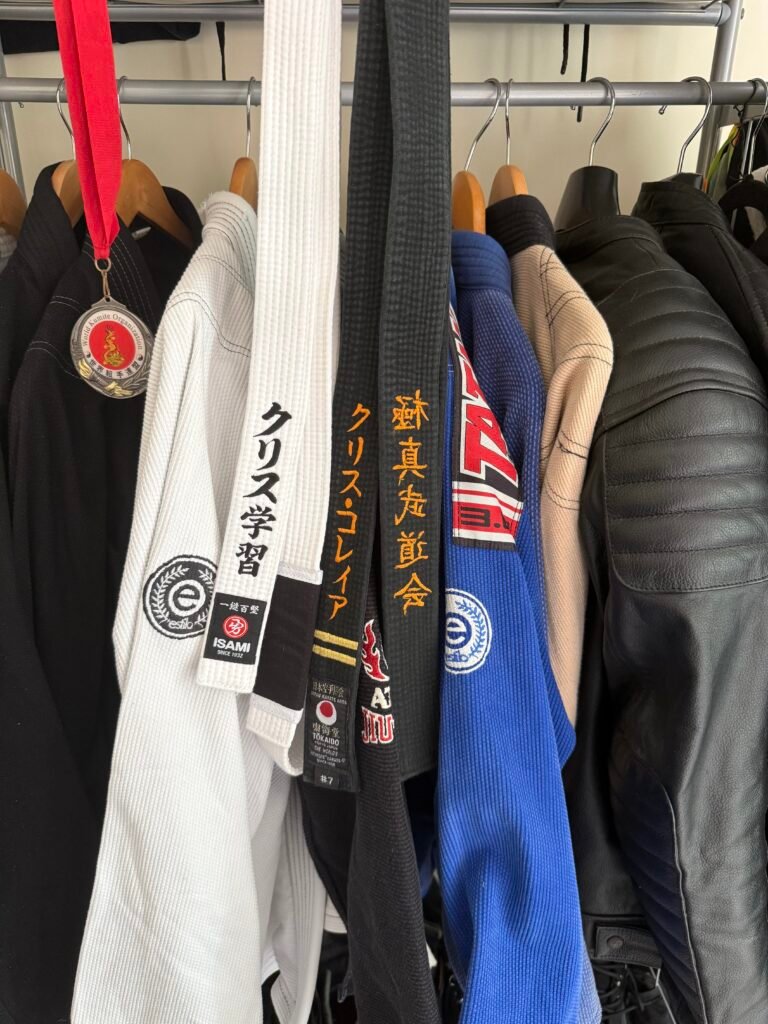
“Are you still willing to be a white belt today?”
Not in rank. In attitude.
Because if there is one thing these past 30 odd years as an adult have taught me, it is this: being willing to start again, again and again, is not a weakness. It is the only reason I am still here, still training, still serving, still sane.
This episode is not the end of my story. It is the end of the introduction. The closing of the first chapter. The foundation that explains everything that will come next.
Chapter 2.
The First Lessons: From Van Damme to the Dojo Floor
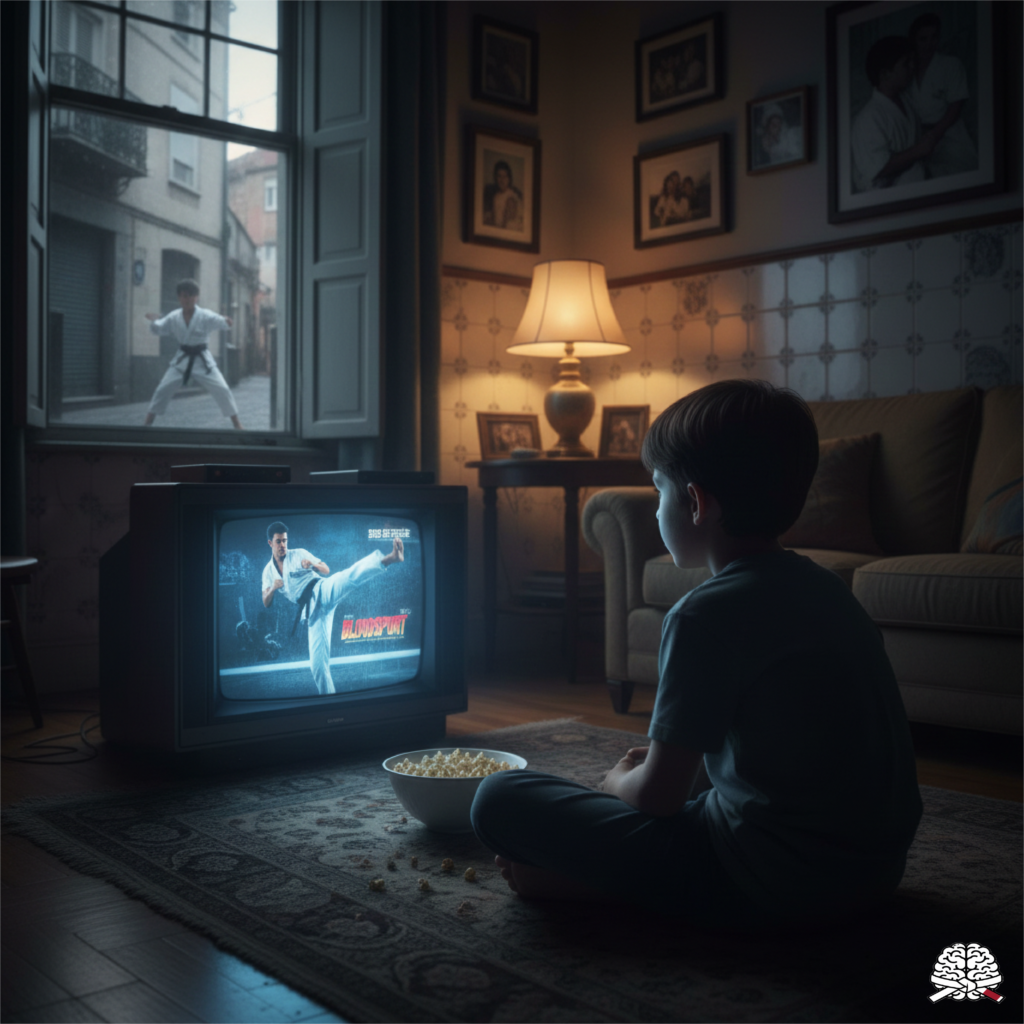
For a Portuguese kid watching Jean-Claude Van Damme on a small TV, martial arts looked like magic. Slow-motion kicks, heroic training montages, neat endings. That was the spark.
But the first real lesson came the moment fantasy collided with hard floor.
No slow motion. No soundtrack. No crowd cheering. Just a kimono (Gi), a stiff stance, and the realisation that kicks do not land as easily as in the films. In reality you gas out, you get hit, lose your balance, feel stupid, go home sore.
The first lesson was humility.
Very quickly, I learned that this game is not about looking like a hero. It is about showing up, even when you feel clumsy and embarrassed. Especially then.
And that lesson has repeated itself in every major chapter since:
- Leaving Shotokan for Kyokushin and being a beginner again.
- Walking into a Jiu Jitsu class after years of striking and getting tied in knots by white belts.
- Trading European comfort (however imperfect) for Australian uncertainty.
- Joining the police at forty, with a family, and doubts.
The pattern is always the same: the moment you think, “I should already be good at this,” life hands you a new white belt.
Chapter 3.
The Black Belt Ego Trap: Learning to Lose
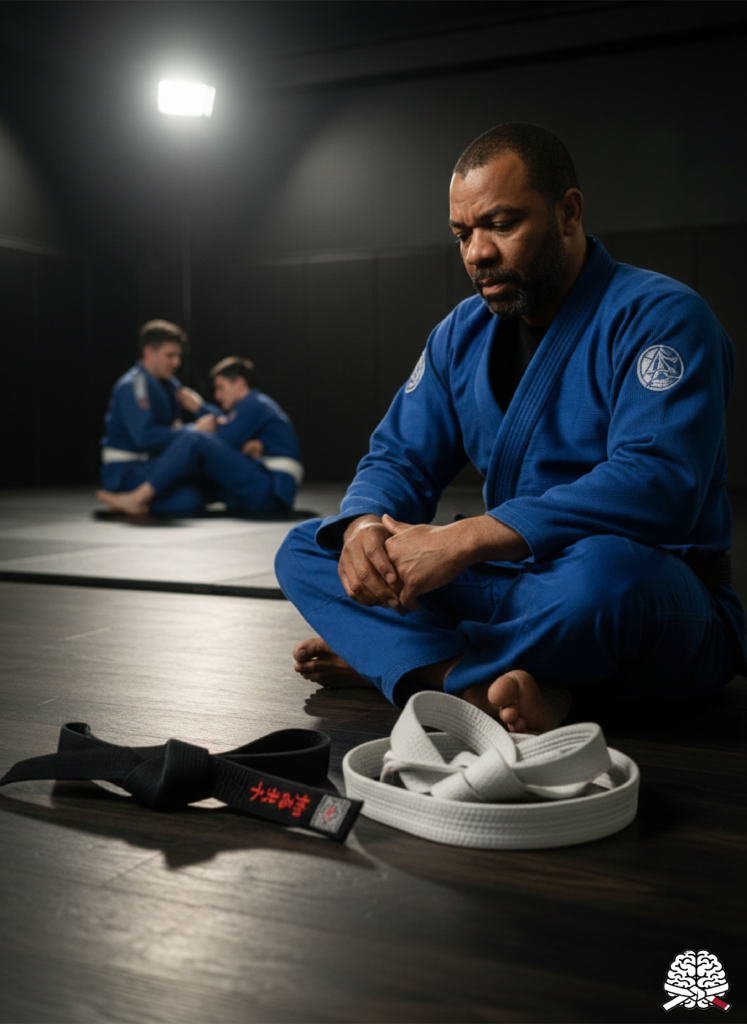
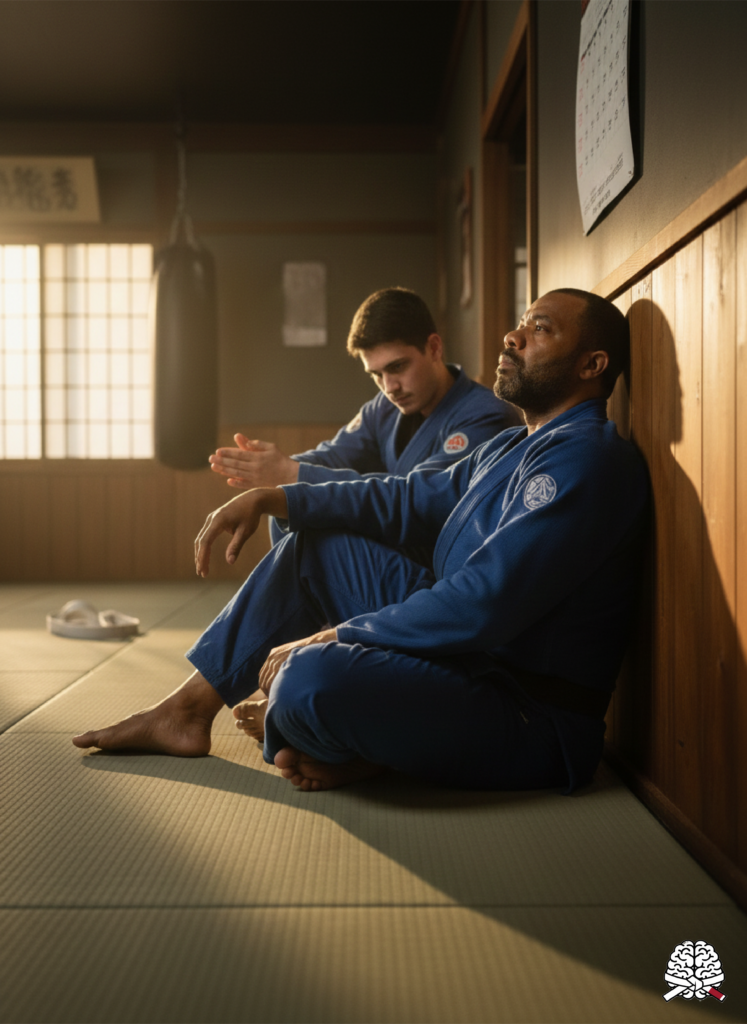
When I walked into my first jiu-jitsu class, I was not a beginner. At least, I did not think I was.
I had a karate black belt. Years of Kyokushin. Bare-knuckle fights. I thought I understood combat. I thought I would do well.
I was wrong.
From day one, I got smashed. Smaller people. Older people. People who looked like they had never thrown a punch in their lives, yet they tied me in knots, choked me out, made me tap again and again.
And for years, I fought it. Not the techniques, my ego.
I kept trying to win the rounds. I refused to accept that I was, in fact, a white belt in this art. I muscled through positions. I used strength when I had no technique. I held my breath, clenched my jaw, and paid the price for it: exhaustion, frustration, injuries.
I thought tapping was losing. I thought being submitted meant I was not good enough.
It took me far too long to realise the truth: every tap is a lesson, not a failure.
The moment I stopped trying to win every round and started trying to learn from every submission, everything changed.
Now, when someone catches me in a choke or a joint lock, I do not see it as defeat. I see it as information. What did I miss? Where was the opening? How do I defend that next time?
And you know what? I am having heaps of fun now.
Because jiu-jitsu is not about proving you are tough. It is about getting better, one roll at a time. It is about being humble enough to admit that you do not know everything, even when you have a black belt in something else.
That shift in mentality, from winning to learning, is the heart of the white belt mindset. And it applies to everything: policing, parenting, relationships, life.
Chapter 4.
Resilience: Not a Word, a Habit
People like to throw the word “resilience” around. Posters, slogans, PowerPoints. But resilience is not a slogan. It is a habit forged by repetition.
In martial arts, resilience looks like:
- Turning up to training after a long shift, when bed would be easier.
- Coming back after an injury when your body is slower, stiffer, unsure.
- Accepting that some days you are the hammer and some days you are the nail.
- Learning from a loss instead of festering over it.
On the job, resilience looks different, but it comes from the same place:
- Going back on patrol after a rough call that sits heavy in your chest.
- Dealing with people on the worst days of their lives without taking it all home.
- Admitting when something shook you, instead of pretending you are made of stone.
And at home, resilience is quieter:
- Listening properly to your kids when your head is still replaying a job or a roll.
- Owning up when stress has made you short-tempered.
- Keeping your training in a way that supports the family, not competes with it.
All of this, for me, goes back to the mat. Getting pinned, outclassed, exhausted, beaten before the timer runs out. There is nowhere to hide there. No badge, no backstory, no excuses. Just you, your lungs, your ego, and the person on top of you.
If you can learn to stay calm there—to breathe under pressure, to resist the urge to panic, to accept the position and work your way out—then you are quietly building resilience that transfers everywhere else.
Resilience is not about being unbreakable. It is about learning how to bend, how to reset, how to come back the next day.
Chapter 5.
Trauma, Stress, and the Role of the Mat
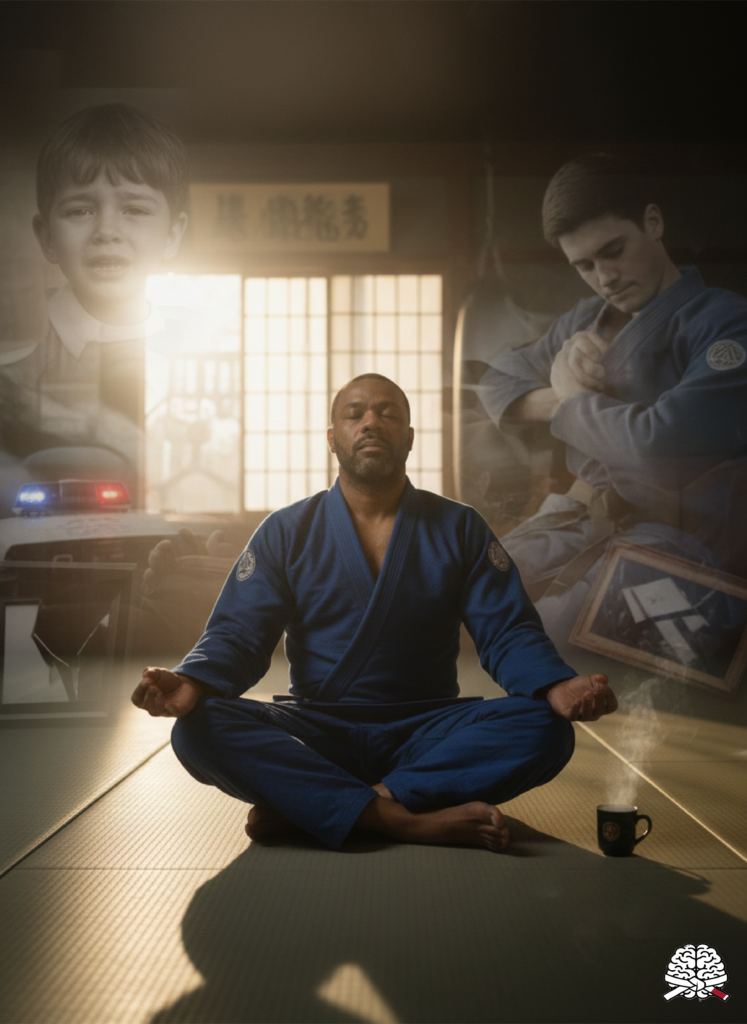
Like many people who end up in martial arts and policing, there are stories behind the uniform and the Gi that are not easy to talk about. Childhood wounds. Violence seen and done. Mistakes. Regrets. Grief.
No amount of high kicks or tough talk erases those things.
What martial arts did give me, though, long before I had words like “trauma” or “mental health”, was a place where my head could rest while my body did the work.
On the mat:
- You are forced into the present moment. If your mind wanders, you get swept.
- You learn to recognise your own panic rising and you learn that it does not have to control you.
- You experience fear and stress in a controlled environment, and you come out the other side, again and again.
In a job where you are exposed to serious incidents, it is very easy to live in a state of constant alertness. That takes a toll. Sleep gets shallow. Patience thins. Small things at home become big arguments.
Regular training became my pressure valve. It helped my nervous system remember what “normal” feels like. It gave me a safe place to shake off some of what the day had left on my shoulders. It also showed me where I was carrying anger, sadness, and fear in my body.
Grappling is honest. You cannot hide tension. You cannot fake calm. Your partner feels the truth.
Over time, I realised that if I did not look after my mind and body, I would not last in policing, in parenting, or in relationships. Martial arts alone is not enough; sometimes you need therapy, support, honest conversations. But training gave me the awareness and the courage to admit that.
For anyone reading this who is struggling with old wounds, dark thoughts, or the constant weight of the job: you are not weak for feeling that way. You are human. Find something, be it martial arts, running, lifting, walking in nature, anything that gives your body a way to process what your head is holding. And if you need help, ask. That is not quitting. That is tactical.
Chapter 6.
Training Smarter: Longevity over Glory
There was a time when I thought toughness was simple:
- Train as hard as possible.
- Say yes to every spar, every roll, every fight.
- Ignore pain. Push through.
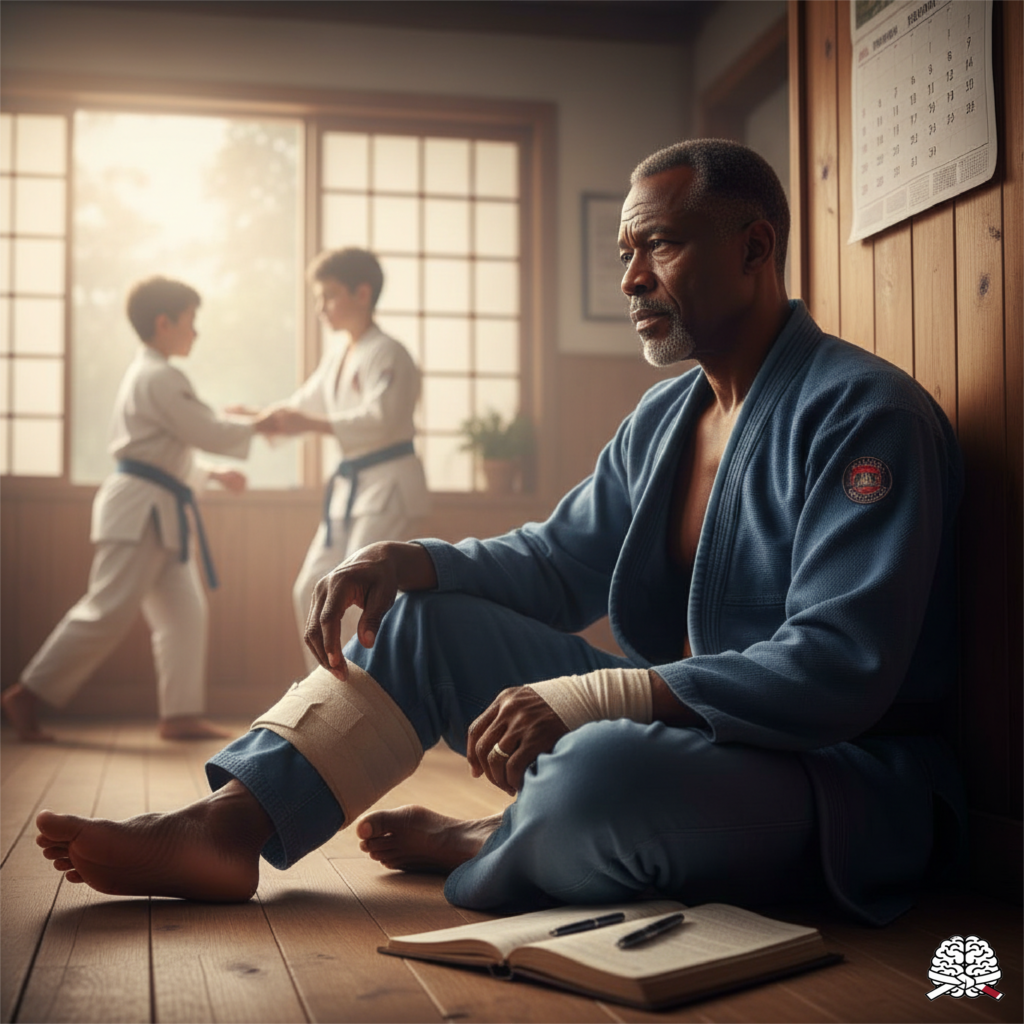
Then came the injuries and the body aches. The nights lying awake because every movement hurt. The frustration of wanting to train but knowing that your body, for now, had other ideas.
Those injuries were not just physical setbacks. They were identity shocks. When you have built your sense of self around being the tough one, the fighter, the one who can “always go,” being forced to slow down can feel like losing yourself.
But those periods taught me something vital: if you want to train for life, you cannot train as if you are immortal.
Now, toughness looks different:
- Saying “no” to rounds that will do more harm than good.
- Focusing on technique, timing, and positioning instead of just force.
- Accepting that your role in the dojo can change, from hungry competitor to reliable training partner to coach and mentor.
Training longevity is an act of respect. Respect for your body. Respect for your family, who want you able to walk and play with the kids. Respect for your job, where you cannot turn up broken.
It is also a mental shift. Letting go of the need to prove yourself every round, every session. Understanding that the real battle is not about winning each roll; it is about still being on the mat in ten, twenty, thirty years’ time.
And that, again, is the white belt mentality: being willing to adjust, learn, and evolve, instead of clinging desperately to who you once were.
Chapter 7.
Badge, Belt, and Home: One Nervous System
People sometimes talk as if life can be neatly separated:
- You have your “work self”.
- Your “home self”.
- Your “gym self”.
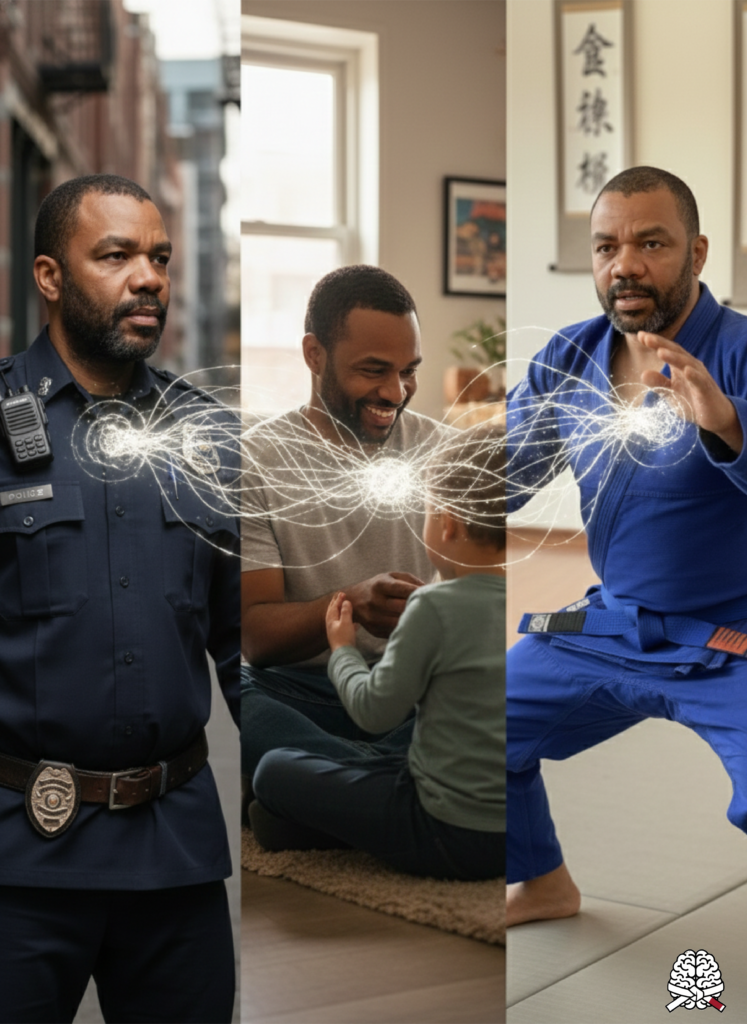
In reality, there is only one nervous system living all those lives.
The way you respond under pressure on the mat affects the way you respond under pressure on the street. The way you manage stress at work affects the patience you bring home. The way you use power in uniform shapes the way you use your voice with your partner and children.
For me, the mat has become a daily reminder that I am not as strong, as skilled, or as in control as my ego might like to believe. And that is a good thing. Because in policing, the moment you start to believe you are always right, always dominant, always justified—that is when you become dangerous.
Being regularly humbled by people of all sizes and backgrounds on a jiu-jitsu mat is one of the best safeguards against that.
It reminds you:
- Use only the force that is necessary.
- Stay calm when others are losing it.
- Admit when you are wrong and adjust.
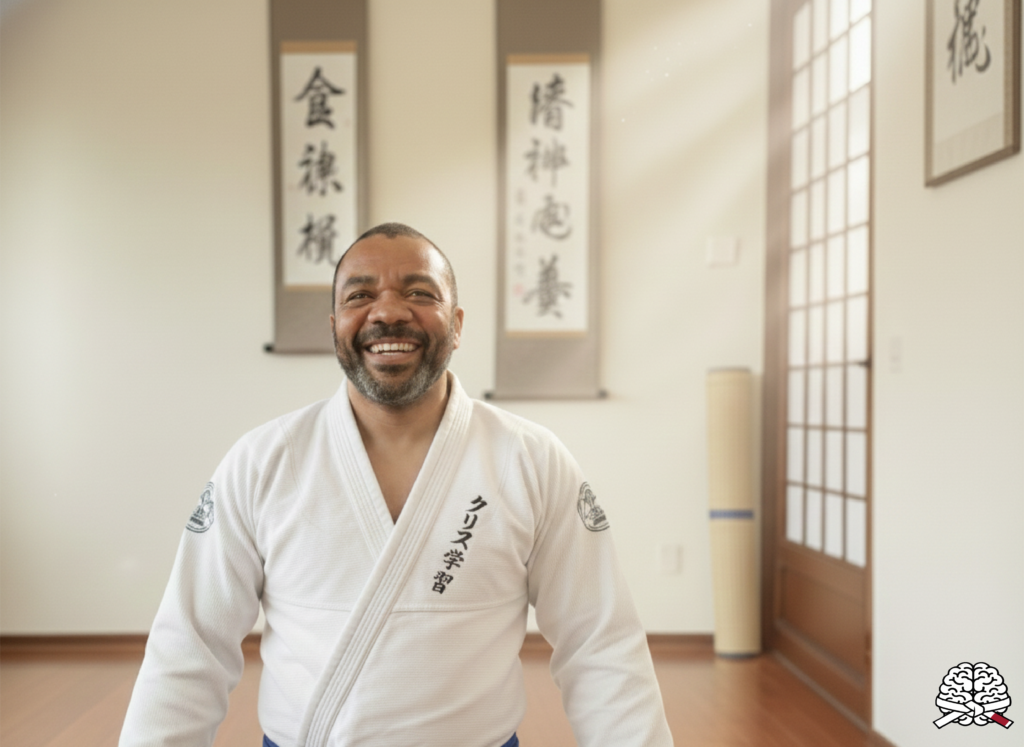
At home, the same principle applies. My kids do not care about my rank, my fights, my arrests. They care whether I am present, whether I listen, whether I can handle frustration without exploding. If martial arts only made me better at fighting, it would be a very narrow return on investment. The real value is how it has shaped the father, husband, partner, and officer behind the belt and badge.
Chapter 8.
The White Belt Mentality, Defined at Last
So, after all these episodes, from Van Damme to Kyokushin, from trauma to therapy on the mat, from bare-knuckle fights to BJJ, from the Portuguese army to Australian policing, from migration to family life, what does “white belt mentality” actually mean?
To me, it means:
- Humility: Accepting that you do not know everything, even in areas where you have experience.
- Curiosity: Asking, “How can I do this better?” instead of, “How can I prove I am right?”
- Adaptability: Being willing to change methods when reality shows you their limits.
- Consistency: Turning up, again and again, especially on the days you feel like staying home.
- Compassion: Remembering that everyone you meet, on the mat, on the street, at home, is fighting battles you cannot see.
- Learning over winning: Understanding that every tap, every loss, every failure is data, not defeat.
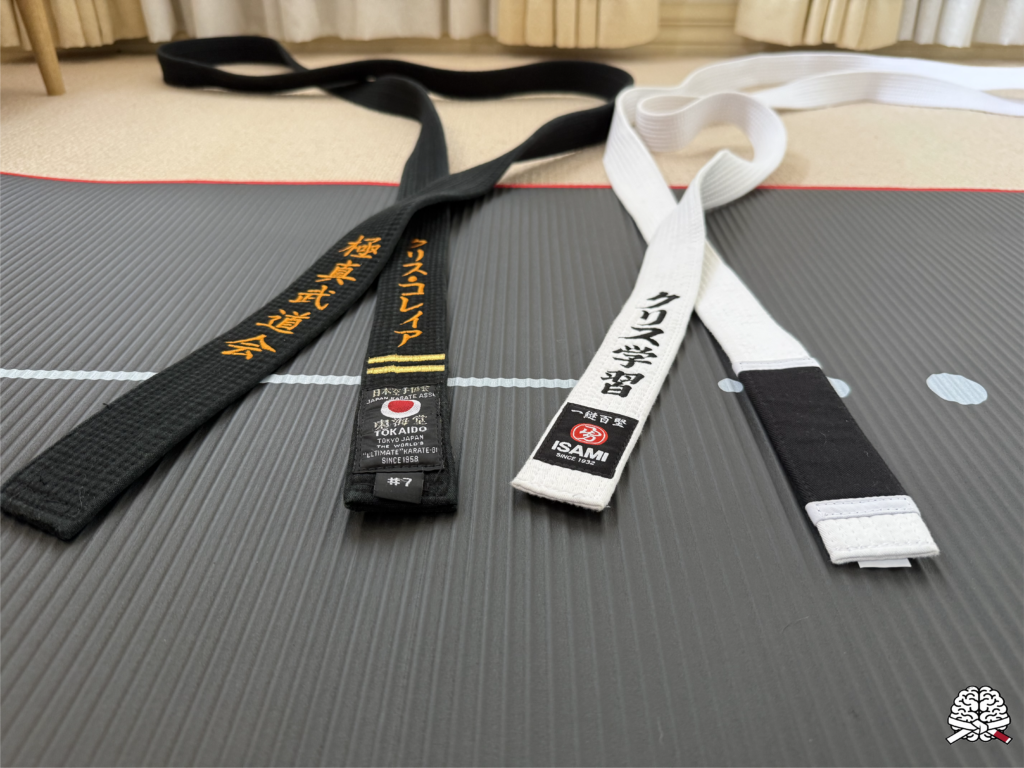
It is not about pretending to be a beginner forever. It is about never letting ego close the door on learning. It is about understanding that every new phase of life, new country, new job, new injury, new relationship, hands you a fresh white belt and asks, “Are you willing to start again?”
Chapter 9.
Closing This Chapter, Opening the Next
This first series, My Journey with the Badge, has been about building the background:
- The spark that got a boy in Portugal into martial arts.
- The teachers and environments that shaped his discipline and grit.
- The traumas that bent but did not break him.
- The decision to migrate, to serve, to keep training in a new land.
- The times the body gave way and forced a smarter approach.
- The ego trap of trying to win instead of learn, and the freedom that came from letting go.
- The constant, quiet work of managing stress and mental health while wearing a badge and a belt.
If you have stayed with me through these episodes, thank you. You now know where I come from, why I step on the mat, why I pin a badge to my chest, and why I talk so much about resilience and mental health. You have seen that behind every “tough” story is a long list of doubts, fears, failures, and second chances.
But this is only the beginning.

The next part of this blog will move from background to perspective. From my story to the people who shaped it. I will talk honestly about:
- The different BJJ and martial arts teachers I have trained under, from old school to modern.
- What they did well, where they fell short, and what that taught me.
- How teaching methods have evolved over the years, for better and for worse.
- How all of that influences the way I now teach and coach others in martial arts, self-defence, and mental health.
This will not be a series of attacks or gossip. It will be a look at how teachers, good and bad, can shape a student’s life, values, and mental health. And how we, as students and instructors, can do better.
Because this blog is not just about my journey. It is about yours.
Whether you are a martial artist, a fellow officer or first responder, an immigrant starting again in a new country, a parent trying to stay present, or someone quietly wrestling with their own mind:
- You are not alone.
- You are not broken beyond repair.
- And you are never too old, too busy, or too far gone to put on a new white belt—literally or metaphorically—and start again.
This is the end of the introductory series.
But it is only the beginning of this ongoing Martial Arts, Hand-to-Hand Self-Defence, and Mental Health blog.
Take a breath.
Tie your belt. We are just getting started
What about you? What’s been your “white belt moment”? Drop a comment below, I’d love to hear your story.
Leave a Reply