

I became utterly committed to it. Belts climbed, katas multiplied, and I genuinely believed I’d found my martial arts home. The philosophy was solid, the structure was clear, and there was something deeply satisfying about the formality of it all. In Europe, if you wanted karate, Shotokan was essentially what you got. And I was fine with that.
The Rumour I Dismissed
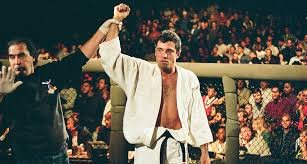
Then, right before I migrated to Australia in 2003, the whispers started. There was a Brazilian, impossibly confident, with a new style and tecnique that demanded attention. He was called Royce Gracie and his fighting style was BJJ??
Apparently, he was destroying everyone in something called the Ultimate Fighting Championship. The hype was absolutely mental. Everyone was talking about it.
I remember thinking: another trend. Another martial arts fad that would blow over in the wind…
(Spoiler alert: I was spectacularly wrong.)
The Australian Plot Twist
When I arrived in Australia, I did what felt natural and went looking for a martial arts gym to continue my training. What I found wasn’t the tidy, traditional Shotokan dojo I was expecting. It was a Mixed Martial Arts academy, all energy and chaos and half a dozen disciplines crammed under one roof. Goju Ryu Karate mixed with Judo, wrestling scattered about, and something called Brazilian Jiu-Jitsu that I’d vaguely heard of.
This was my first real encounter with BJJ. It didn’t immediately blow my mind, that came later, but it planted a seed. More importantly, it exposed me to a truth I wasn’t quite ready to accept: Shotokan wasn’t the only path.
The Kata Problem
But here’s where I’ll be brutally honest: despite my deep respect for Shotokan, I absolutely despised kata.
I know. Controversial!
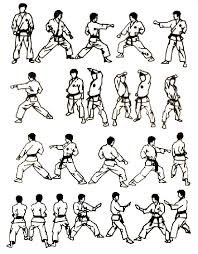
Let me explain: Kata is the memorised, slow-motion choreography of predetermined movements, performed in solitude with increasing complexity as you move up the ranks.
It’s supposed to encode wisdom. It’s supposed to be beautiful. For many practitioners, it’s the heart of the art.
For me? It felt like learning a complex dance I didn’t want to perform.
I came to martial arts because of the improvisation, the free flow, the ability to adapt and respond. I wanted to spar, to react, to make split-second decisions. Kata removed all of that. It was the opposite of everything I loved: rigid, prescribed, offering no room for individuality or creativity. Every movement was dictated. Every response was predetermined. It felt suffocating.
This disconnect never quite went away. I respected what kata meant, but I couldn’t connect with what it was.
Five Years Later: Kyokushin
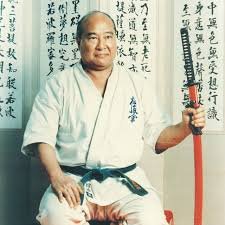
Five years into my Australian life, circumstances moved me to a different suburb. And in one of those happy accidents that shapes a person’s journey, I ended up at a Kyokushin dojo.
If Shotokan was the refined, philosophical path, Kyokushin was its wild older brother.
The first class hit me like a physical manifesto: this is what karate is supposed to be. Kyokushin isn’t interested in points or pretty movements. It doesn’t award marks for technique on paper. Kyokushin is full-contact, bareknuckle fighting with minimal protective gear. Although does not allow punches to the face it allows kicks, as well as knees and as many elbows and strikes to the body. It’s brutal, honest, and absolutely unforgiving.
I fell in love with it immediately.
After years of point-sparring tournaments back home, watered-down affairs where you got penalised for actually hurting your opponent, Kyokushin felt like I’d finally found the real thing. There’s no ambiguity on a Kyokushin mat. You know where you stand, you know if you’ve landed a kick properly, you know if you’ve got the technique and distance right or if you’re just getting lucky.
I started competing. Not casually, but with genuine commitment. Every local Kyokushin tournament became a benchmark, a chance to test myself against fighters who weren’t interested in looking good, only in being effective. The difference from my kickboxing tournament days was staggering. Kickboxing competitions felt theatrical in comparison; Kyokushin felt true and fearless.
The Strongest Karate
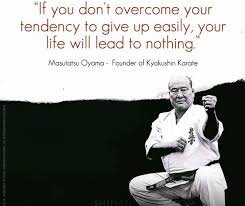
There’s a saying in martial arts circles: Kyokushin is the strongest karate because it removes the filter of pageantry and gets to the heart of what works. No points awarded for aesthetic form. No judges deciding whether your kick looked nice. Just combat.
Was I the most gifted fighter in those tournaments? Absolutely not. But I held my own. More importantly, I understood what I was learning in a way I never quite did with Shotokan’s elaborate katas. Every time I got caught by a kick I didn’t see coming, or successfully defended against someone stronger, or managed to hold my ground against someone twice my size, that was real knowledge. That couldn’t be forgotten or misinterpreted.
Reflecting on the Journey
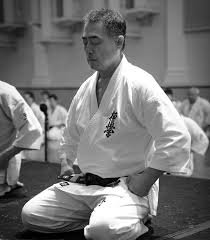
Looking back, I don’t regret my Shotokan years. That foundation gave me discipline, respect for tradition, and an understanding of proper form. It was the right path for where I was.
But Kyokushin? That became the truth I was searching for. Not because it’s more “authentic”, that’s nonsense, honestly. All martial arts are valid. But because it aligned with how I learn, how I think, and what I actually value in combat. It gave me improvisation within a framework. It gave me consequences that meant something.
These days, whether I’m on a Kyokushin mat, a kickboxing ring, or a jiu-jitsu tatami, I’m hunting for that same feeling: the space where philosophy meets honest combat, where what you’ve learned either works or it doesn’t. That’s the through-line of my martial arts journey, whether I knew it at the time or not.
From Portuguese Shotokan to Australian bareknuckle, turns out I was always looking for the same thing. I just took the long way round to find it.
Have you trained in different martial arts styles? Did you discover something unexpected about yourself when you switched disciplines? I’d love to hear your story in the comments below.