
THE OPENING QUESTION THAT CHANGES EVERYTHING
What if the self-defense foundation I’ve been standing on my whole life was built on a lie?
Not a small lie. Not a white lie. A foundational lie that affects millions of people every single day.
And what if I spent decades not realizing it?
CHAPTER 1.
THE MOMENT I SHOULD HAVE WALKED AWAY
I was 15 years old. First day at Clube Naval Setubalense in Setúbal, Portugal.
My bestfriend stood next to me. We were nervous in that way kids are excited, slightly terrified, hopefully about to step into something legendary.
The head coach started the warmup. Brutal. Unrelenting. He forced my bestfriend into the splits. Not progressively. Not with patience. Forced.
We heard the scream.
We watched him limp toward the door, tears streaming down his face. He never came back.
Five minutes later, the same coach was standing in front of the class. He called over a brown belt, a senior student. Without warning, without explanation, he threw a chudan mae geri (front kick) directly at his stomach.
Full power.
No control. No padding.
The brown belt buckled but held his ground.
I flinched. My entire body recoiled in that moment. Every instinct said: This is too hard. Leave.
But I looked at the coach and I stayed.
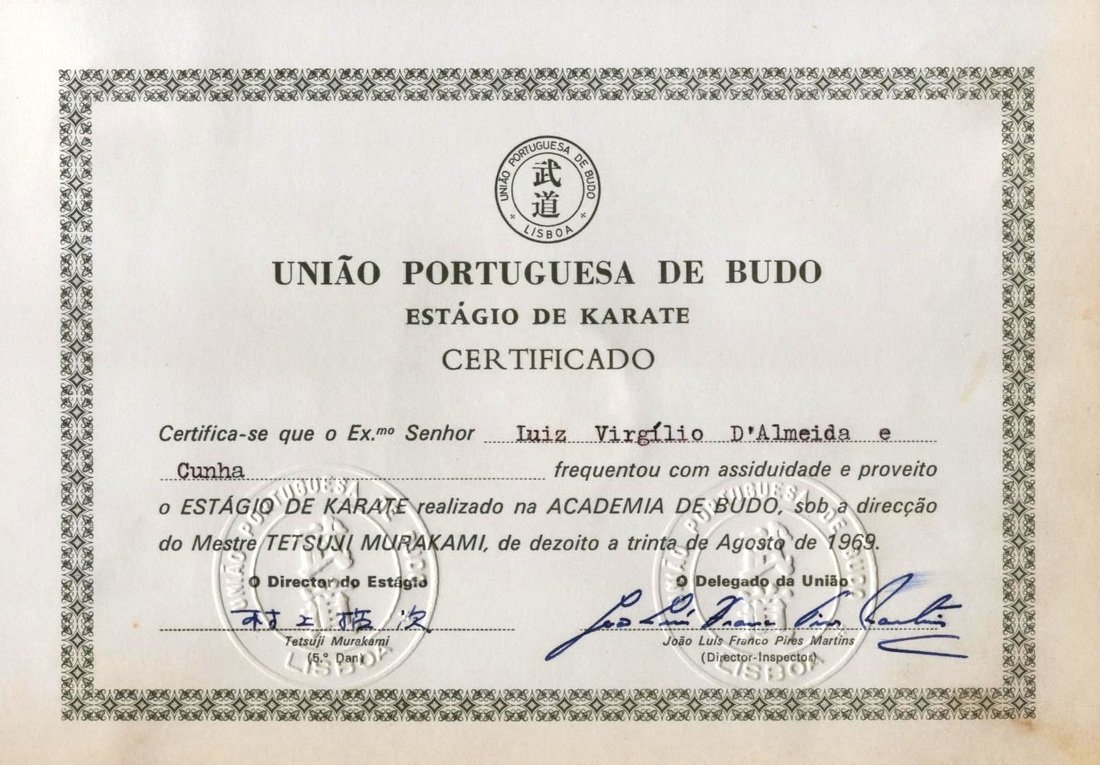
His name was Mestre Luís Virgílio Cunha.
And even though I didn’t understand it yet, I knew I was looking at something real.
CHAPTER 2.
WHAT I THOUGHT REAL LOOKED LIKE
Mestre Cunha wasn’t tall. He wasn’t the most athletic person in the room. He didn’t have the biggest muscles or the cinematic kicks.
But he moved with a kind of hardened certainty that made him seem unbeatable.
Years later, I learned why.
He had been promoted to Shodan (1st Dan) by Satoshi Miyazaki, the JKA (Japan Karate Association) master who arrived in Belgium in 1967 to build the entire karate infrastructure for Europe. Miyazaki was a student of Masatoshi Nakayama, the legendary figure who systematized JKA karate itself.
This wasn’t some random tough guy.
This was lineage. Real lineage. A direct unbroken chain stretching back to the foundations of modern karate.
And suddenly, the harshness made sense to me. It wasn’t random brutality.
It was authenticity.
The training was mechanical. We walked up and down wooden floorboards, no mats, nothing soft, repeating combinations until our legs burned. Kick, punch, kick, punch. Kihon. Kata. Discipline. Military structure. No questions. No exploration.
But watching Mestre Cunha move, watching him command respect through pure presence, I felt something I’d never felt before:
I want to become what he is.
There was a student about my age with Van Damme-level flexibility. His jumping spinning kicks were cinematic. Everyone watched him. But Mestre Cunha was the one who commanded the room without trying.
That’s what I wanted.
Not the acrobatics. The presence. The hardness that comes from decades of commitment to something real.
The lesson I took, without knowing it yet: Karate could forge an indestructible person. But I still didn’t understand the cost.

CHAPTER 3.
THE LOVE AND THE DOUBT
Here’s what I need to say clearly: I love karate.
Not as a hobby. Not as fitness.
I loved the philosophy. The discipline. The way it demanded everything from you. Your body, your mind, your commitment. The dojo culture. The respect. The hierarchy. The sense that you were part of something larger than yourself.
I loved Mestre Cunha.
I achieved my Shodan in 1995. That rank meant something to me. It still does.
But here’s the tension that would haunt me for decades:
Even as I loved what karate was, I was starting to notice what it wasn’t.
My friend who left in tears on day one, he could have been incredible. We’ll never know.
The teaching method was mechanical. “Here’s a combination. Copy it.” No exploration. No understanding of why it worked. Just: Do what I do.
And the sparring, when we did it, it was light. Controlled. Safe.
Which meant: We were practicing self-defence without ever feeling resistance.
I didn’t have words for this doubt yet. But my body knew something was wrong.
CHAPTER 4.
THE ESCAPE (AUSTRALIA, ARRIVING LOST)
I immigrated to Australia with a white belt mind, eager to learn something new or just trying to get back to training.
I found Shihan Vincent Busutil at a Goju-Ryu/MMA academy.
He offered something Mestre Cunha never did: options.
The curriculum was a menu of karate, yes, but also takedowns, clinches, street self-defence, ground work, progressive katas – yikes.
But, they gave me a manual. It felt modern. And well structured.
For the first time, I wasn’t worried about injury on day one.
But here’s what started to eat at me: The intensity varied wildly. Some coaches had brutal warmups. Others not so much. The contact in the full contact sparring was light. Controlled. Too safe, for my likes.
They made us buy all sorts of equipment; pads, gloves, shin guards. Everything designed to minimize damage.
And I got good grades. I progressed. I felt like I was learning.
But something was missing.
A question started forming in my mind that I couldn’t articulate:
If the goal is to teach self-defence, why are we pulling every punch?
If we say this is “self-defence training,” what does that actually mean?
How would I know if it worked?
I trained with Busutil for years. I got to 1st Kyu (one rank below Shodan – black belt). I learned techniques I’d never seen in Portugal.
But I never felt that same presence. That same certainty.
I loved Mestre Cunha because he seemed like he could actually fight.
With Busutil, I had no idea.
And that gap, between the man who seemed unbeatable and the system that gave me techniques but no confidence, that gap was where doubt lived.
CHAPTER 5.
THE MOMENT THE LIE BECAME UNDENIABLE
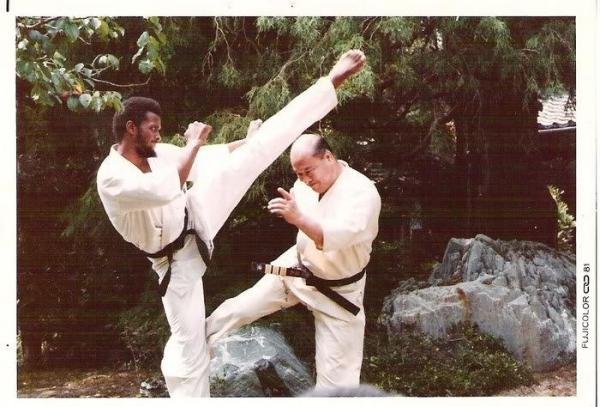
Then I trained Kyokushin under some of the best instructors in Melbourne, including Shihan Stirling “Slaughter” Carmichael.
No gloves.
No shin pads.
No pulling.
Bone on bone contact.
The sparring was real.
People got hit. People got thrown. People adapted because their opponent was resisting with full intent.
And suddenly, finally, everything made sense.
I understood why Mestre Cunha had kicked that brown belt with full power on my first day.
It wasn’t cruelty.
It wasn’t a test of toughness for its own sake.
It was the only honest way to teach.
Because when you’re being hit, you can’t memorize your way out of it. You can’t copy a combination. You have to feel what works.
Your body learns what’s real.
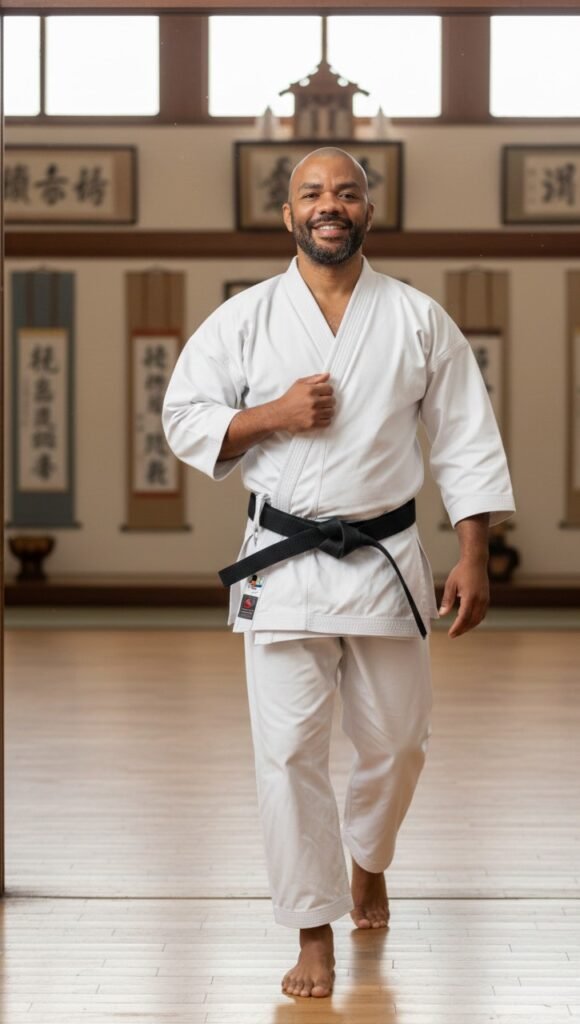
I achieved my Shodan (1st Degree) in Kyokushin. Then my Nidan (2nd Degree). And something shifted.
A black belt who has never been tested under real resistance doesn’t know themselves. They’re operating on theory, not reality.
But I had been tested. I had been forced to defend myself. I got hit. I got thrown. I had to adapt.
Now I knew.
CHAPTER 6.
THE IDENTITY CRISIS NOBODY TALKS ABOUT
Here’s the problem that nobody wants to name:
I had two legitimate Shodans.
In Shotokan (Portugal), I got my black belt through hard training. Real sparring. Kickboxing-style contact in class. Tournament competition. Hard testing. That belt meant something.
In Kyokushin, I got my black belt the same way, through real pressure testing, resisting opponents, full contact. That belt meant something too.
But they meant different things.
Shotokan taught me technique, precision, timing, distance management. The sparring was hard. The tournaments were harder. I learned to read opponents, to control range, to land technique cleanly.
Kyokushin taught me what happens when someone doesn’t cooperate. When they’re trying to hurt you. When you have to adapt in real time.
Both required real testing. Both shaped how I move. Both are legitimate.
But here’s where the identity crisis actually came:
When I training at other karate dojos.
All these places claimed “self-defence training.”
But the actual focus was student retention through light contact point-sparring. Heavy emphasis on kata. Promotion based on attendance, not skill.
Show up enough times per month? You get promoted.
Do your forms? You get promoted.
Actually defend yourself against a resisting opponent? Not required.
And that’s when I realized the lie wasn’t about my training. It was about what most dojos were selling.
My Shotokan belt earned through hard sparring and tournaments, that was real.
My Kyokushin belt earned through full contact and pressure testing, that was real.
But the karate black belts being sold by commercial dojos who promised “self-defence” while teaching light point-sparring and attendance-based promotion?
Those weren’t the same thing at all.
So the identity crisis became clearer:
If I earned my ranks through real testing, but the market is filled with ranks earned through attendance, what does “black belt” actually mean anymore?
More importantly: How do people know the difference?
How do parents know they’re paying for real training versus belt-factory marketing?
This wasn’t about my achievement. My training was legitimate. Both of them.
This was about the majority of dojos that had weaponized the rank system into a retention tool.
They’d learned that if you test students hard, they quit. So they stopped testing. They made promotion easy. Keep showing up, keep paying, get your next belt.
The forms look the same. The belt color looks the same. The rank name is identical.
But the actual skill level? The pressure-tested ability to defend yourself? The character that comes from surviving real challenge?
Completely different.
And nobody talks about this gap because the dojos profiting from it don’t want you to see it.
So here’s what I finally understood:
My two Shodans were earned through legitimate pressure testing and real challenge. I can stand behind both.
But the black belts being created in commercial point-sparring dojos with attendance-based promotion? Those aren’t in the same category.
And the lie isn’t that my achievement was false. The lie is that both are being called the same thing.
CHAPTER 7.
WHERE THE REAL EDUCATION BEGAN (POLICE ACADEMY)
Here’s where it gets real.
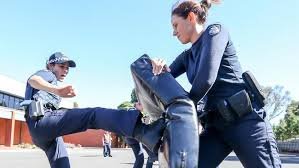
My training in karate overlapped with my work in the police force.
After some scary encounters, situations where I had to physically control someone, something became clear:
Karate didn’t prepare me for this.
Pressure-tested grappling did.
I wasn’t alone. My colleagues noticed the same thing. The police academy instructors? They were all strong BJJ advocates. They pushed grappling, not striking.
Why?
Because when you’re under real stress, with adrenaline, with a resisting opponent who doesn’t care about your belt rankm, forms don’t matter.
Muscle memory under pressure matters.
So I pivoted. I started training Brazilian Jiu-Jitsu seriously.
And here’s the identity crisis that nobody talks about:
If I was a 2nd Dan black belt in Kyokushin, but a white belt in BJJ, which one was I really?
Which rank represented who I actually was?
The answer forced me to rebuild how I understood martial arts entirely.
CHAPTER 8.
THE LIE THAT KEEPS GETTING BIGGER
Let me name it directly.
Most dojos advertise “self-defence training.”
What they actually teach is “technique in isolation under controlled conditions.”
These are not the same thing.
Real self-defence requires:
- Pressure testing (sparring with resisting opponents who are trying to hurt you)
- Context (weapons, multiple attackers, legal/ethical reality)
- Adaptation (your opponent doesn’t follow your kata)
- Environmental awareness (clothing, space, escape routes)
Most dojos teach:
- Light sparring (no real pressure)
- Isolated scenarios (one attacker, clean environment)
- Memorized responses (the same combination every time)
- Controlled environments (mats, safety equipment, no variables)
When a dojo sells parents on “self-defence” while teaching light sparring, they’re not wrong about the techniques.
They’re lying about what those techniques will do in reality.
And here’s what bothers me most:
This lie affects people’s actual safety.
A parent watches their kid get a yellow belt. They feel safer. “Now my child can defend themselves.”
No. Your child learned a combination. In a safe environment. With no resistance.
That’s not defence. That’s choreography.
And when that child is actually threatened, when someone resists, when the environment is unpredictable, when adrenaline hits, they’ll discover the truth.
Their foundation was built on a lie.
CHAPTER 9.
THE TENSION INSIDE LOVING SOMETHING BROKEN
But here’s where I have to be honest:
I still love karate.
I love what Mestre Cunha represented. I love the philosophy. I love the discipline. I love the way it demands commitment.
The lineage through Satoshi Miyazaki and Masatoshi Nakayama is real. The principles are sound. The technical foundation is legitimate.
But the system, the way it’s taught, the way it’s marketed, the way it grades people who have never been pressure-tested, that system is broken.
And here’s the thing that makes it complicated:
The harshness that injured my friend? That same harshness was what created Mestre Cunha’s presence. That same pressure created authenticity.
Modern karate tried to fix the injury problem by removing all contact.
Now students feel safe. They progress. They get their belts.
But they’re graduating to black belt without ever being tested.
So which failure is worse?
A system that breaks people physically but prepares them for reality?
Or a system that keeps them safe but leaves them fundamentally unprepared?
I’ve spent years with that question. And I still love the answer that tradition gave me, even though I know it’s incomplete.

CHAPTER 10.
WHAT I FINALLY UNDERSTOOD (THE RELIEF)
When I started teaching, I had to answer this question:
What is a real black belt?
Not a theoretical answer. Not a traditional answer.
A real answer.
A complete black belt must have all of these:
? The ability to defend themselves against a resisting opponent of similar size
? Genuine assertiveness and confidence (not performed confidence)
? Character worthy of the title (humility, respect, integrity)
? Evidence that they’ve been tested under real pressure
Not some of these. All of these.
Most modern black belts fail at least one. Many fail all four.
Here’s why: The system that created them was optimized for something else, for profit, for retention, for feeling good, not for creating actual martial artists.
But here’s what I realized: I could reject the system while honoring what it taught me.
Mestre Cunha gave me structure, discipline, character.
I could keep that.
The traditional testing method didn’t pressure-test me.
I could change that.
The philosophy was sound. The lineage was real.
The pedagogy was incomplete.
So I built something different.
CHAPTER 11.
HONORING THE FOUNDATION WHILE REBUILDING THE STRUCTURE
From Mestre Cunha, I kept:
- Structure & Discipline
- Technical Foundation
- Dojo Culture
- Character Development
- Long-Term Commitment
From Shihan Busutil, I learned:
- Variety matters
- Accessibility matters
- Organization matters
From Sensei Carmichael, I learned:
- Pressure testing is non-negotiable
- Real resistance forces adaptation
- That’s the only honest arbiter of truth
And from my police experience, I learned:
- Theory breaks under stress
- Memorization doesn’t work when someone’s resisting
- Real situations reveal what actually works
So I built a teaching philosophy that refuses to replicate the broken system:
If I can’t explain a technique in simple words, I don’t truly understand it.
This forces me to think deeply about the “why” behind every movement. It means I can’t hide behind “because the master said so.”
Students must find their own path through exploration.
Not because exploration is trendy, but because it’s the only way they develop problem-solving skills. Choreography doesn’t teach that. Pressure testing does.
I refuse to provide way too much information.
Constraints-based learning works. Overload doesn’t.
And here’s the non-negotiable: Students will be pressure-tested.
Not brutally. Not without care. But honestly.
Because a black belt from my dojo will know themselves. They won’t graduate and wonder, “Can I actually fight?”
The answer will be clear.
CHAPTER 12.
WHAT KEEPS STUDENTS LONG-TERM (AND WHY IT MATTERS)
I realized something when I looked at retention:
The students who stayed weren’t the ones who were afraid of the coach.
They were the ones who trusted the coach.
What keeps students long-term:
- A knowledgeable, approachable teacher (not a tyrant)
- Gamified, fun classes with real challenges
- A friendly community that weeds out bullies
- Smart intensity contact sport yes, but minimal unnecessary injuries
- Regular, consistent grading with clear progression
What makes students quit:
- “Fight club” style teaching (excessive pressure to compete, intimidation)
- Feeling unsafe
- Not knowing if they’re actually learning
The secret: You can have pressure testing and community. You can have real standards and accessible teaching. You don’t have to choose.
Mestre Cunha thought you had to choose.
Modern dojos think you have to choose.
But you don’t.
CHAPTER 13.
THE ANSWER TO THE OPENING QUESTION
Remember where we started?
What if the self-defense foundation I’ve been standing on my whole life was built on a lie?
Here’s the truth:
It was.
My Shotokan black belt didn’t prepare me for actual confrontation.
The light sparring didn’t teach me to handle real resistance.
The kata was beautiful, but it didn’t teach me how to adapt when someone fought back.
That’s the lie.
But here’s what’s not a lie:
The discipline I learned was real.
The character development was real.
The love of the art was real.
The lineage through Mestre Cunha to Satoshi Miyazaki was real.
I can honor all of that while admitting: the pedagogical foundation was incomplete.
That’s not betraying karate. That’s respecting it enough to make it better.
CHAPTER 14.
WHAT MARTIAL ARTS SHOULD ACTUALLY BE
Here’s what I think martial arts deserve to be:
? Pressure-tested (not just forms)
? Honest about limitations (not marketed as a magic bullet)
? Community-focused (not ego-driven)
? Accessible and rigorous (not harsh or soft—smart)
? Conceptually clear (not mystical)
If your dojo can’t explain WHY a technique works in simple terms, you should ask hard questions.
If your dojo hasn’t pressure-tested you, you’re not a black belt you’re just wearing the uniform.
If your dojo sells “self-defence” while teaching light sparring, they know the gap between their marketing and their product.
But you don’t have to accept that gap.
CHAPTER 15.
WHERE THE REAL LESSONS CAME FROM
I spent decades training under legends.
I have real lineage. I have legitimate rank. I have earned credentials.
But I learned the most important lessons outside the dojo.
In a police car, during a real encounter.
On the street, when theory met reality.
In a Kyokushin ring, when I was forced to adapt.
That’s where martial arts gets honest.
And that’s the only place worth training.
Not in a dojo with a master on a pedestal.
Not in a system that claims to teach self-defence while pulling punches.
In the real world, under pressure, where you learn what actually works.
WHAT THIS MEANS FOR YOU
If you’re reading this and you have a black belt, I want you to ask yourself:
Have I actually been pressure-tested?
Can I defend myself against a resisting opponent?
Does my dojo teach me why things work, or just how to copy them?
If you can answer yes to all three, you’re in a good place.
If you can’t, you might be standing on the same foundation I stood on for years.
A foundation that looked solid.
But cracked the moment reality tested it.
ABOUT THIS SERIES
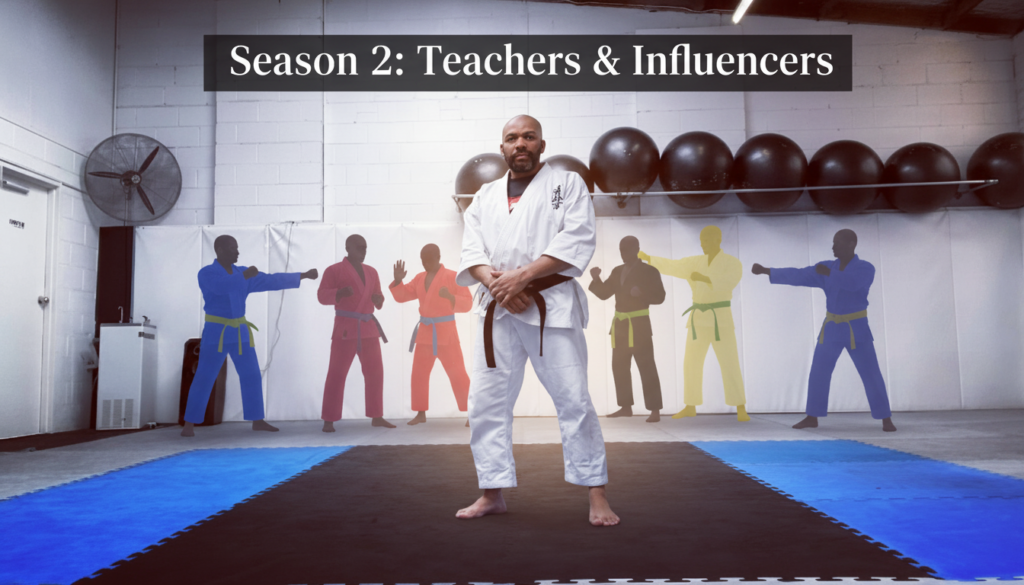
This is Episode 11 of Season 2: “Teachers & Influencers.”
Over the next 9 episodes, I’ll explore how different martial arts systems teach, what actually transfers to reality, and why some methods work while others fail.
We’ll look at BJJ pioneers who proved grappling superiority.
Modern conceptual systems designed around clarity and pressure testing.
Game-based learning that challenges everything we thought we knew about drilling.
And we’ll end with the cutting edge: Constraints-Led Approach and Ecological Dynamics, the paradigm shift that asks:
What if we’ve been teaching martial arts wrong the entire time?
Because martial arts deserve better.
Better teachers.
Better systems.
More honest marketing.
And you deserve to know the truth about what rank actually means.
See you in Episode 12