

Hey there, welcome to Grounded Ramblings BlogCast.
I’m Crish, army veteran, retired cop, lifelong martial artist and solopreneur in my 50s, trying to make sense of combat sports without the bullshit.
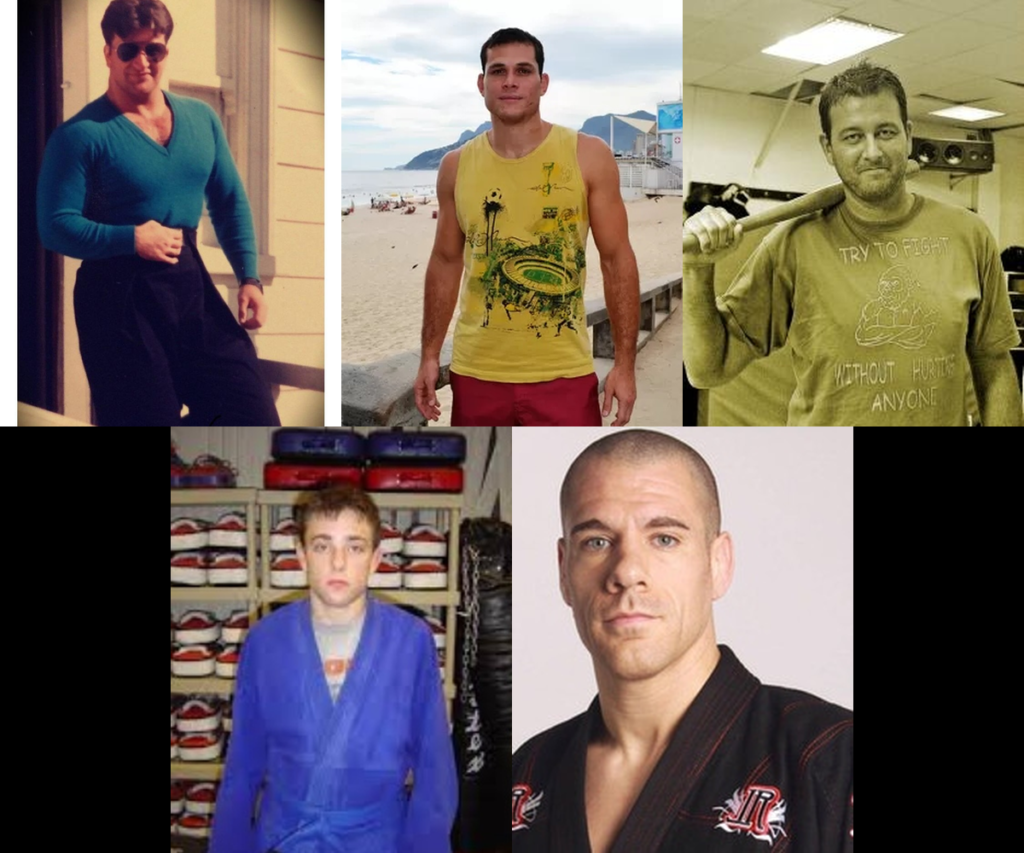
Today we’re diving into Episode 14: Conceptual Systems Pt 1 — Danaher, Roger Gracie, Thornton, Hall, Lovato.
By the end, you’ll see how these five turned jiu?jitsu from a bag of techniques into blueprints, frameworks, and pressure systems that promise clarity, but sometimes risk overcomplicating the art for normal, tired bodies like ours.
We’ll talk systems, aliveness, fundamentals, leg locks, pressure passing, and the danger of turning good ideas into cults.
Stick around till the end and drop a comment: which of these systems actually fits the body you bring to the mats right now?
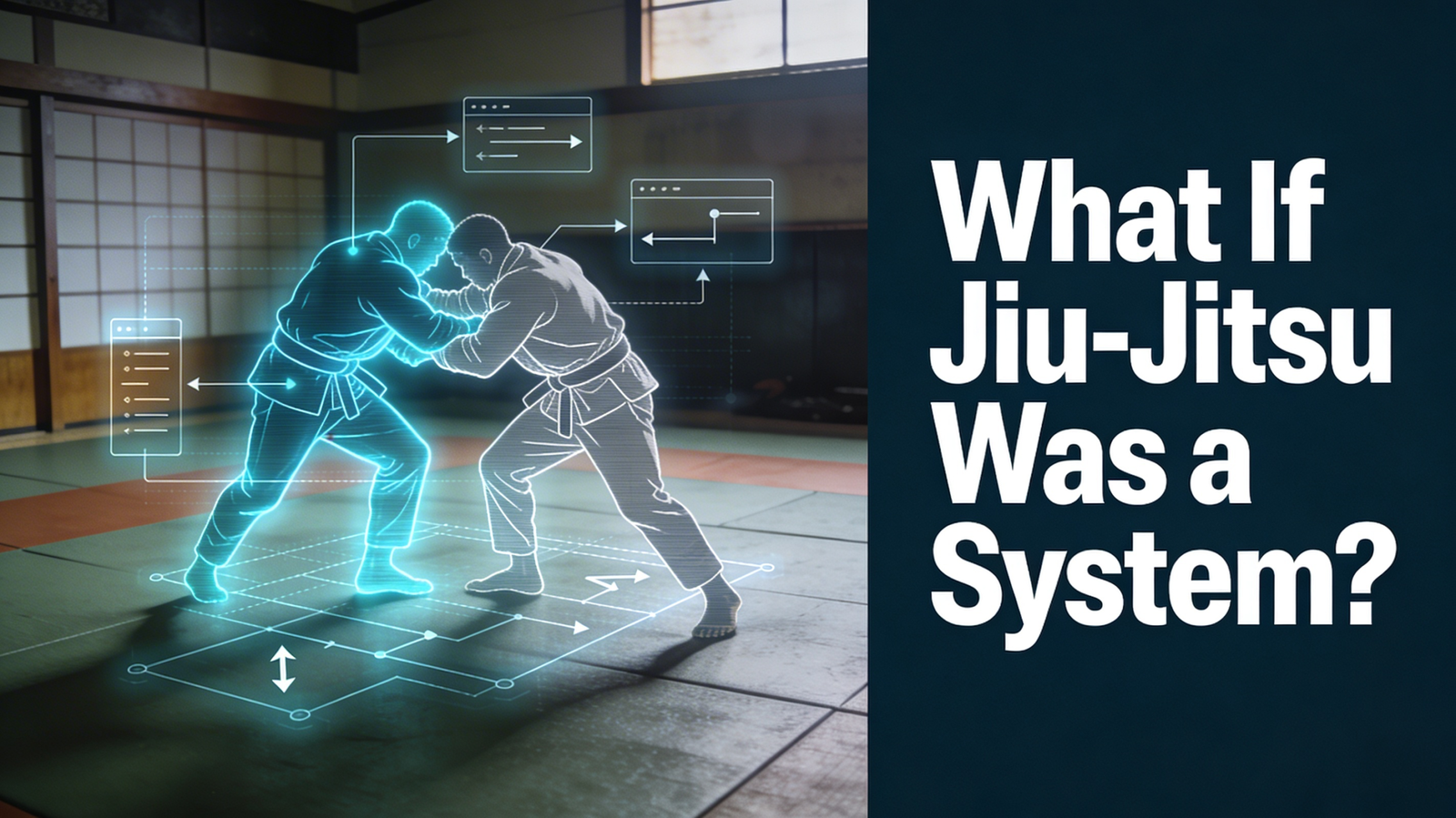
Chapter 1: What If Jiu-Jitsu Was a System?
Welcome back to Season 2.
Up until this point, we’ve followed the story of the pioneers who built the house of Brazilian Jiu-Jitsu, and the innovators who remodelled it, adding new rooms, new angles, and new ways of thinking. But Episode 14 is where we start asking a bigger question: what if Jiu-Jitsu stopped being a collection of moves and became a full system instead?
For a long time, I understood the art as a bag of techniques. You learn a sweep, then a pass, then a submission. You chain them together, see what works, and hope that under pressure they don’t disappear. But as you get older, as injuries pile up, as your job starts to bleed into your training, that model stops feeling sustainable. You need structure, not just scrambles.
That’s where the idea of “conceptual systems” comes in. Instead of learning a million techniques, you learn a framework: a small set of principles that can be applied to almost every situation. It’s like shifting from memorizing a dictionary to understanding grammar. You don’t need to know every word; you need to know how words fit together.
So in this episode, we’re going to look at five people who didn’t just teach techniques, they built entire systems:
John Danaher.
Roger Gracie.
Matt Thornton.
Ryan Hall.
Rafael Lovato Jr.
Each of them tried to organize Jiu-Jitsu in their own way, and each of them left a different mark on how we think about grappling today.
The tension for me, as someone who’s lived in the middle of trauma, policing, and aging, is this:
did these systems make Jiu-Jitsu clearer and more accessible, or did they just make it more complicated, more detached, more “academic”?
That’s the question that will run through the rest of this chapter and the ones that follow.
Chapter 2: The Body I Bring to the Mats Now
By the time I’m sitting in a gym in Australia, with a badge, a pension plan, and a few more years of life than I used to think I’d have, I’m not looking for magic anymore. I’m looking for something honest. Something that still works on a 2 a.m. roadside, in a midnight hallway, or in a crowded police cell.
I’m not training like a twenty-year-old athlete who can roll four times a week, recover fast, and take the next day off. I’m training like a 50-year-old man who gets up early, drives a car with a radio blaring, puts on a belt heavier than my gi, and then tries to roll without damaging something permanent. My knees already have opinions. My shoulders have a history. My nervous system has been dialed up to high for years.
So when I look at the people who are building “systems,” I’m asking a very specific question:
does this make sense for a body that’s not just surviving the mat, but also surviving a job?
I’m not looking for abstract perfection. I want tools that are repeatable, that don’t demand peak athleticism, and that still hold up when adrenaline starts flooding the bloodstream.
That attitude shapes the way I listen to John Danaher, Roger Gracie, Thornton, Hall, and Lovato. I’m not just hearing their techniques; I’m asking, does this translate into something I can actually teach to tired, injured, anxious adults who only have a few rounds to give?
That’s the filter that’s going to run through everything we talk about here.
Chapter 3: John Danaher – The Blueprint Master
John Danaher is the guy who turned Jiu-Jitsu into a blueprint. He didn’t just teach techniques; he taught sequences. He took the chaos of grappling and tried to organize it into predictable pathways. His famous four-step system, take the opponent down, pass the legs, pin them, then submit them, gave a lot of practitioners a clear arc for how a round should unfold, rather than just a collection of random positions.
He also built entire subsystems around things like the back attack and leg locks. Instead of a handful of flashy triangles, he showed families of options that all flowed out of a single, dominant position. That kind of structure can be incredibly powerful, especially for people who want to understand the why behind a technique, not just the how.
But there’s a cost. Danaher’s style is dense, analytical, and very verbal. He uses a lot of language, a lot of labels, and a lot of internal logic. For some people, that’s a revelation; for others, it feels like being dropped into a graduate level seminar on grappling. It can also put a lot of pressure on the instructor to “know the system” rather than just let the student feel their way into the position.
So the question I’m asking about Danaher is this: does his system make Jiu-Jitsu easier to learn, or does it make it easier to hide behind words instead of actual pressure testing.
That’s a tension that keeps coming up in the next chapters as well.

Chapter 4: Roger Gracie – The Quiet Fundamentals Genius
Roger Gracie did something very different. While Danaher was mapping out the whole landscape, Roger was refining the ground under his feet. He showed that you don’t need a thousand techniques to dominate; you just need a few things, done absurdly well.
His closed guard and his cross-choke work are legendary, but what makes him especially interesting for someone like me is the way he operates under pressure without relying on speed. He’s not trying to out-move anyone. He’s trying to out-structure them. He uses subtle weight shifts, tiny adjustments in distance, and invisible grips to make people feel like they’re stuck in cement.
That’s huge for older grapplers or for people with injuries. It means there’s a way to compete, even when you’re not the fastest or the strongest. You can win by making your body an environment that’s very hard to escape from.
The downside, of course, is that Roger’s style demands immense positional discipline. It’s not flashy. It’s not chaotic. It’s patient, almost boring sometimes. A lot of people today don’t like that. They want sweeps, transitions, and constant movement. But Roger’s work is a reminder that fundamentals, when pushed to their limits, can still crush the most modern, fancy guards on the planet.
Chapter 5: Matt Thornton – The Aliveness Firebrand
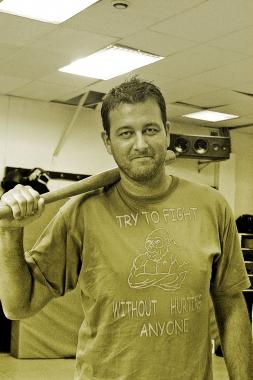
Then there’s Matt Thornton, who came from a very different angle. He wasn’t just building a system of positions; he was attacking the way people were teaching martial arts in the first place. His big idea, aliveness, was simple: if you’re not training with resistance, timing, and unpredictability, you’re not actually training.
Thornton argued that the traditional model of “stand in a line, do one move, then everyone smiles and moves on” was a dangerous illusion. It builds confidence without competence. He pushed for training that included real sparring, real pressure, and real mistakes, even if that meant looking bad or getting tapped in front of the class.
That philosophy is powerful for someone coming from a high-stress job. Policing, ambulance work, even everyday life, none of it is compliant. People don’t perfectly set up the punch, or calmly hold the position so you can practice your technique.
Thornton’s work forces you to ask, am I preparing for a real fight, or am I just rehearsing a performance?
But Thornton’s approach also has a cost. He’s very critical of what he calls “traditional” martial arts, and that can create a kind of culture war. Some people feel dismissed, disrespected, or pushed out. The tension for me is how to keep the idea of aliveness without burning down everything that came before it.

Chapter 6: Ryan Hall – The Architect of the 50/50
Ryan Hall is the guy who turned the 50/50 guard into a philosophical statement. To a lot of people, that position looks like stalling, like a clever way to avoid the real fight. But Hall treats it as a structural solution to a very real problem: modern guards are complex, and sometimes the safest place to be is in the middle of the storm, not at the edges.
His approach to the 50/50 and inverted guard is highly cerebral. He’s not just teaching a grip break or a transition; he’s teaching you how to think in terms of angles, weight, and leverage. For someone who’s older, injured, or not blessed with insane athleticism, that kind of thinking can be a lifeline. It lets you control the fight without needing to explode past someone.
But this is also where the culture wars get intense. Hall’s style is rule set dependent, heavily influenced by the way leg-lock rules evolved. His opponents argue that he’s teaching people to stall, to grind, to avoid the very contact that makes Jiu-Jitsu beautiful. And there’s a real risk that if you only teach Hall’s style, you raise a generation of grapplers who don’t know how to move, roll, or just be present in the chaos.
The tension for me is this: can I steal Hall’s obsession with structure and position without importing his tendency to turn grappling into a kind of cold, almost clinical chess game?
That’s a question I’m still wrestling with.
Chapter 7: Rafael Lovato Jr. – The Pressure Funnel
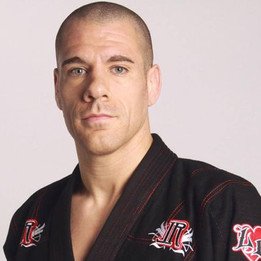
Rafael Lovato Jr. brings the conversation back to pressure. His “headquarters” position and the “funnel” concept are designed to grind opponents down into predictable, desperate reactions from the bottom. He’s not trying to win by being flashier; he’s trying to make it feel impossible to escape.
This kind of pressure passing is brutal for people who rely on complex, mobile guards. It drags the fight back into a world of simple, heavy dominance. And that’s exactly why it works so well in both gi and MMA. In a real fight, or in a cage, you don’t always have the luxury of a fancy guard. Sometimes you just need to be heavy, and to be there as long as it takes.
The downside is that Lovato’s system demands a lot of physical conditioning and balance. You can’t fake that kind of pressure. If you’re not strong enough, or if your base is off, you get swept. So for older or injured grapplers, this can feel intimidating. It’s a reminder that not every system is friendly to every body.
Chapter 8: The Trap of Over-Systematizing
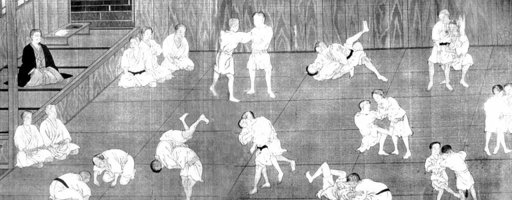
Now, after looking at all these figures: Danaher, Roger, Thornton, Hall, Lovato, a certain pattern starts to show up. Each of them offers clarity. Each of them gives you a framework that makes the madness of Jiu-Jitsu feel a little more manageable. But there’s also a risk: if you take these systems too seriously, they can start to replace the very thing you’re trying to preserve Jiu-Jitsu as a living, messy, evolving art.
Systems can become dogmas. They can create a new hierarchy where teachers are judged not by how well they prepare people for real fights, but by how well they can explain the latest theory. They can push people away from the simple, ugly, beautiful scrambling that happens when two people just try to control each other.
That’s a trap for instructors like me. It’s easy to fall in love with the blueprint, with the terminology, with the prestige of knowing the “system.” But if you’re teaching cops, nurses, teachers, and factory workers, you can’t let that happen. You need systems that simplify, not systems that impress.
Chapter 9: The Everyday Grappler’s Reality
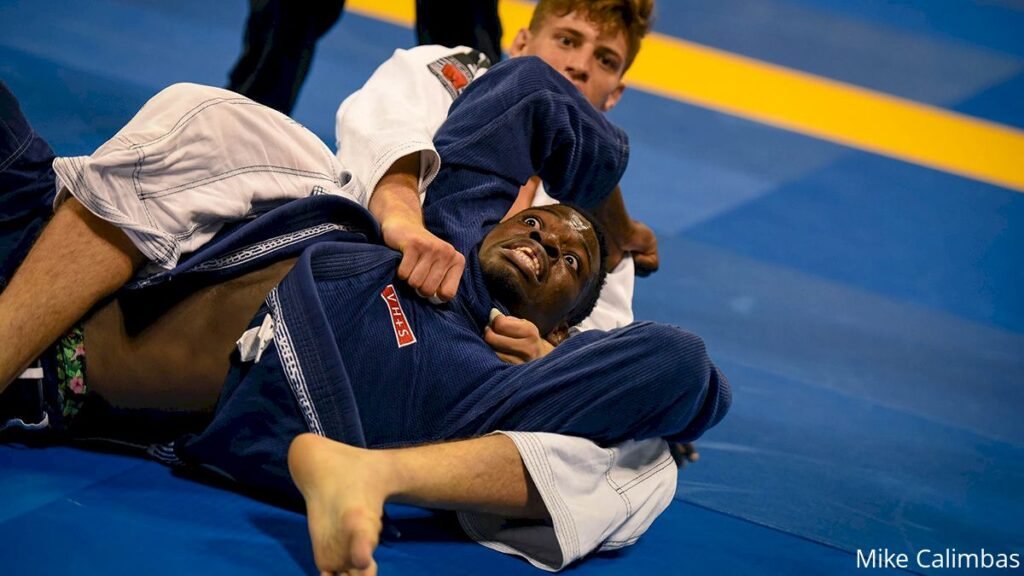
This question matters because of who is actually walking into the gym. Not a team of full-time athletes. Not a network of elite competitors. Just regular people. People who have a day job, a family, and maybe a history of trauma or injury. People who have thirty minutes, maybe an hour, to give the mats.
For them, the most important system is not the one that wins the most medals. It’s the one that keeps them safe, keeps them moving, and keeps them coming back. A system that burns out their knees, their shoulders, or their nervous system is a failed system, no matter how clever it looks on paper.
So when I look at Danaher’s structure, Roger’s fundamentals, Thornton’s aliveness, Hall’s architecture, and Lovato’s pressure, I’m not trying to copy them. I’m trying to translate them into something that works in a 6 p.m. class after a 12-hour shift. That means prioritizing simplicity, durability, and adaptability over perfection.
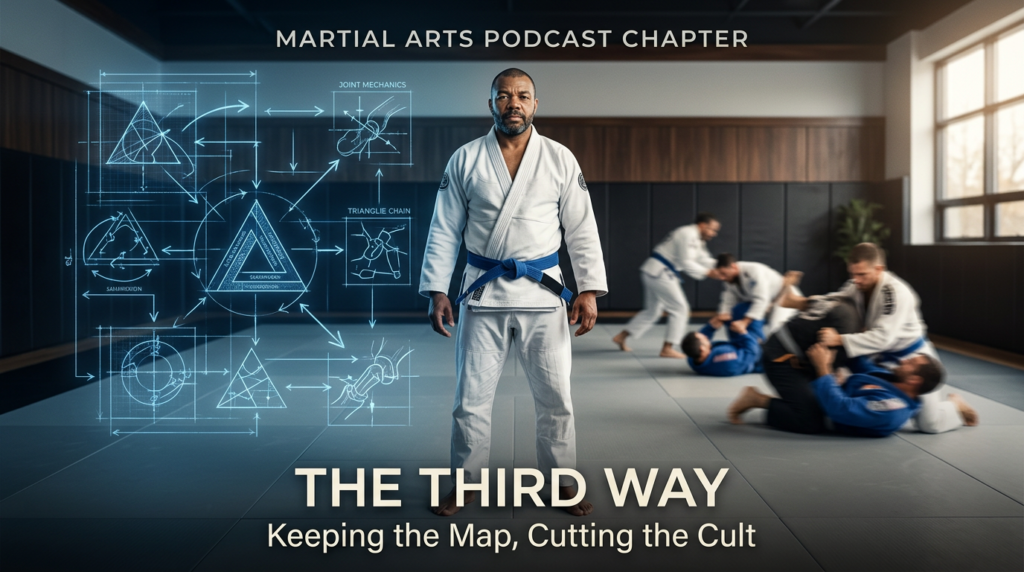
Chapter 10: The Third Way – Keeping the Map, Cutting the Cult
After all of this, my answer starts to crystallize into what I’ve already called a third way. The best conceptual systems don’t replace fundamentals; they organize them. They give you a map, but they don’t claim to be the territory.
From Danaher, I take the clarity of sequence and structure. From Roger, I take the value of mastering a few positions to the point of mastery. From Thornton, I take the uncompromising demand for aliveness. From Hall, I take the idea that structure and angles can be more important than speed. From Lovato, I take the reminder that pressure still matters, even when modern guards try to escape it.
But I also leave behind the cult-like language, the ego-driven hierarchies, and the idea that there’s only one right way to do things. Because in the end, Jiu-Jitsu belongs to the people on the mat, not to the teachers who build the most beautiful blueprints.
So the takeaway for this episode is simple: steal the clarity, reject the cults, and teach what still works under pressure. That’s the map I’m trying to follow as I move through the rest of this season—and the rest of my life on and off the mats.